THE INTERSECTION OF TWO PRIESTHOODS
“He taketh away the first, that He may establish the second.” — Hebrews 10:9
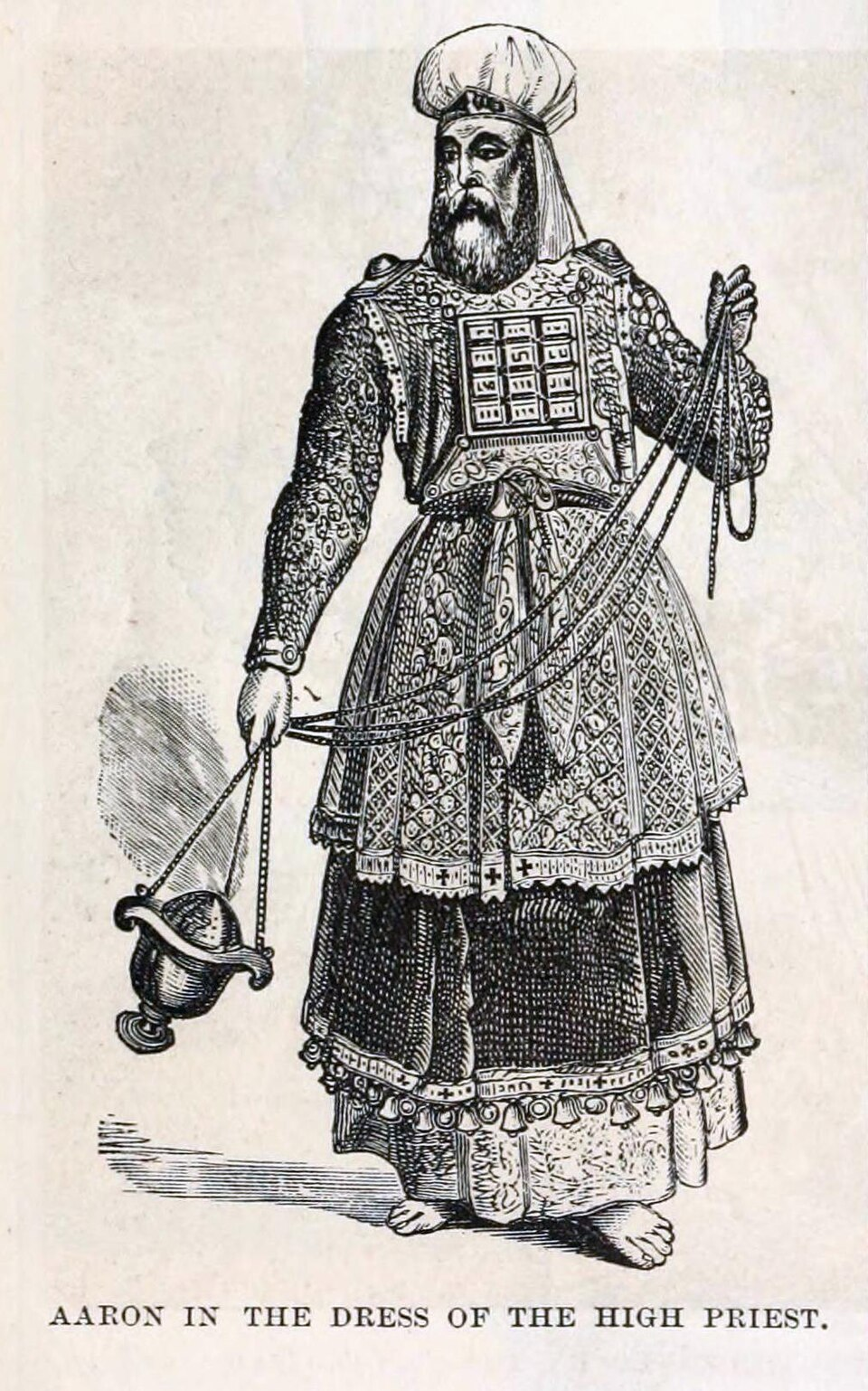
1. The False Accusations
Scripture Reading: Matthew 26:59–61; John 2:19
On the night Jesus was betrayed, history shifted in a quiet courtroom. Before the high priest Caiaphas stood the very One who would fulfill the Law and open a new way to God. As the false accusations flew, the old order of sacrifices and priestly rituals was about to give way to something far greater—the perfect High Priest who would offer Himself as the final sacrifice for sin.
Christ stood silent before earthly priests so that we might boldly approach the throne of grace.
Reflection Questions:
- When have you seen God’s words misunderstood or misrepresented?
- How does Jesus’ composure encourage you when you are misjudged?
2. The High Priest’s Demand
Scripture Reading: Matthew 26:62–63
Caiaphas demanded under oath that Jesus declare whether He was the Christ, the Son of God. Under the Law of Moses (Leviticus 5:1), the high priest had the authority to require a witness to speak truthfully.
Key Point:
Even when pressured unjustly, Jesus spoke truthfully and fearlessly, affirming His divine identity.
3. Jesus’ Declaration of His Authority
Scripture Reading: Matthew 26:64
Jesus replied:
“Thou hast said: nevertheless I say unto you, hereafter shall ye see the Son of man sitting on the right hand of power, and coming in the clouds of heaven.”
This was unmistakable Messianic language (Psalm 110:1; Daniel 7:13–14).
In that moment, Jesus publicly declared Himself as the Messiah, the Son of God, and the rightful King.
Reflection Question:
- What does it mean for you personally that Jesus sits at the right hand of power today?
4. The Tearing of the Garments
Scripture Reading: Matthew 26:65; Leviticus 10:6; 21:10
The earthly high priest unknowingly acknowledged the arrival of the true High Priest—Jesus Christ.
The Act:
Caiaphas tore his priestly robes in outrage.
The Law:
The high priest was forbidden to tear his garments. Doing so was considered an act of disqualification (Leviticus 10:6; 21:10).
The Symbolism:
By tearing his robe in the presence of Jesus, Caiaphas nullified his own priesthood.
Key Insight:
The earthly high priest unknowingly acknowledged the arrival of the true High Priest—Jesus Christ.
5. The Greater High Priest
Scripture Reading: Hebrews 7:23–27; 9:11–14
Jesus stood as both the Lamb of God to be sacrificed and the High Priest who would offer the sacrifice. The old covenant priesthood was passing away; a new and better covenant was being established.
Reflection Question:
- How does it strengthen your faith to know that Jesus Himself intercedes for you today as your High Priest?
Takeaway Verses for Meditation
Hebrews 4:14–16 – Our compassionate High Priest invites us to draw near.
Hebrews 10:11–14 – Jesus’ one sacrifice makes us perfect forever.
John 1:29 – “Behold the Lamb of God, who takes away the sin of the world.”
JESUS, OUR FAITHFUL AND MERCIFUL HIGH PRIEST

“Though He were a Son, yet learned He obedience by the things which He suffered: and being made perfect, He became the author of eternal salvation unto all them that obey Him …” — Hebrews 5:8-9
1. Introduction: The Paradox of the Perfect Son
Jesus was already sinless — “a lamb without spot or blemish” (1 Peter 1:18-19).
So why does Hebrews say He was “made perfect by the things He suffered”?
The answer lies not in His role as the sacrifice, but in His role as our High Priest.
2. Perfected for the Priesthood
“For every high priest taken from among men is ordained for men in things pertaining to God …
So also Christ glorified not Himself to be made an high priest …
‘Thou art a priest forever after the order of Melchizedek.’ …
Though He were a Son, yet learned He obedience by the things which He suffered: and being made perfect, He became the author of eternal salvation …”
— Hebrews 5:1-9
Jesus’ suffering qualified Him to be the kind of High Priest humanity needed:
one who understands weakness, grief, betrayal, and injustice — yet without sin.
3. The God-Man Forever
The hypostatic union — Jesus is fully God and fully man — is not temporary.
From Bethlehem’s manger onward He remains true God and true man for eternity.
After the resurrection He proved His continued humanity:
“Handle Me and see; for a spirit has not flesh and bones as you see I have …
And they gave Him a piece of broiled fish … and He ate before them.“
— Luke 24:39-43
Our High Priest is not a distant spirit but the risen Son who still bears the marks of the cross.
4. A High Priest Who Feels Our Pain
He remembers betrayal, the mockery, the false accusations, the scourging, the cross — yet His prayer was:
“Father, forgive them; for they know not what they do.” — Luke 23:34
Therefore:
“We do not have a high priest who cannot be touched with the feeling of our infirmities, but was in all points tempted as we are — yet without sin. Let us therefore come boldly to the throne of grace …” — Hebrews 4:15-16
There is nothing you suffer that lies outside His understanding or His mercy.
5. Suffering as the Crucible of Perfection
Peter reminds us:
“Christ also suffered for us, leaving us an example, that you should follow His steps … who, when He was reviled, reviled not again … but committed Himself to Him who judges righteously.” — 1 Peter 2:21-23
God’s purpose in the cross was not only for atonement; it was also formational —
to perfect Christ as our merciful and faithful High Priest who can minister to us in every trial.
6. Sharing the Fellowship of His Sufferings
Paul longed:
“… that I may know Him and the fellowship of His sufferings …” — Philippians 3:10
We share that fellowship when we accept that Christ’s sufferings were the furnace that shaped Him for us. Therefore we can:
“… run with endurance the race that is set before us, looking unto Jesus, the author and finisher of our faith; who for the joy set before Him endured the cross, despising the shame …Consider Him … lest you be wearied and faint in your minds.” — Hebrews 12:1-3
7. Grace in Our Weakness
Paul’s own thorn-in-the-flesh experience shows how Christ’s priestly ministry meets us:
“I pleaded with the Lord three times that it might depart …And He said to me, ‘My grace is sufficient for you, for My strength is made perfect in weakness.’ … For when I am weak, then I am strong.” — 2 Corinthians 12:7-10
The same risen High Priest who interceded for Paul now ministers grace in our frailty.
8. The Living Intercessor
“In all things it was necessary for Him to be made like His brethren, that He might be a merciful and faithful high priest in things pertaining to God … Because He Himself has suffered when tempted, He is able to help those who are being tempted.” — Hebrews 2:17-18
“… He is able to save to the uttermost those who come to God through Him, since He ever lives to make intercession for them.” — Hebrews 7:25
Christ’s intercession is not merely spoken prayers —
His very presence as the perfected High Priest at the Father’s right hand is our continual assurance.
9. Devotional Reflection
Prayer:
Lord Jesus, thank You for entering fully into our humanity, for suffering so that You might become the merciful and faithful High Priest we need. Teach us to come boldly to Your throne of grace, and to follow in Your steps when we ourselves must suffer for righteousness’ sake. Amen.
10. Study-Guide Questions
- Read Hebrews 5:1-10.
- What specific qualifications for a high priest are mentioned?
- How did Jesus meet those qualifications through suffering?
- In what way does the hypostatic union (Jesus fully God and fully man) deepen our confidence in His priestly care?
- According to Hebrews 4:15-16, how should we approach the throne of grace in times of weakness or temptation?
- Reflect on 2 Corinthians 12:7-10.
- How can God’s grace be “sufficient” even when our thorn remains?
- What personal comfort do you draw from knowing Christ “ever lives to make intercession” for you?
THE REAL HUMAN EXPERIENCE OF JESUS

“And without controversy great is the mystery of godliness:
God was manifest in the flesh, justified in the Spirit, seen of angels, preached unto the Gentiles, believed on in the world, received up into glory.”
— 1 Timothy 3:16
Opening Thought
The gospel is unique in that it is not based on mythology. Mythological ideas can sometimes creep into our understanding of the cross of Christ.
For example, when Jesus cried out:
“My God, My God, why have You forsaken Me?”
we often search for hidden mystical explanations—as though God was punishing Him secretly.
In reality, Jesus spoke these words in the most vulnerable, fully human moment of His suffering. He truly felt abandoned, bearing the weight of death with no divine intervention to spare Him. Yet this feeling of abandonment never meant that God was unfaithful or had turned against Him.
1. The Humanity of Jesus at the Cross
- Suffering is part of the human experience, and tragedy often causes us to wonder where God is.
- Jesus experienced the full weight of human suffering—including the question, “Where is God?”
- In His suffering, He was perfected to be our High Priest.
2. Scripture Insights
A. Perfected as High Priest
“For every high priest taken from among men is ordained for men in things pertaining to God…
Who in the days of his flesh… offered up prayers and supplications with strong crying and tears…
Though he were a Son, yet learned he obedience by the things which he suffered:
And being made perfect, he became the author of eternal salvation unto all them that obey him.”
— Hebrews 5:1–5
Jesus’s sufferings were not only for atonement but also part of His perfecting as our merciful High Priest.
B. Sharing in Our Humanity
“…Forasmuch then as the children are partakers of flesh and blood, he also himself likewise took part of the same…
Wherefore in all things it behoved him to be made like unto his brethren, that he might be a merciful and faithful high priest in things pertaining to God, to make reconciliation for the sins of the people. For in that he himself hath suffered being tempted, he is able to succour (help) them that are tempted.“
— Hebrews 2:14, 17–18
“…We have not an high priest which cannot be touched with the feeling of our infirmities; but was in all points tempted like as we are, yet without sin. Let us therefore come boldly unto the throne of grace…” — Hebrews 4:15–16
3. Jesus’s Agony Foretold
Jesus dreaded this hour of suffering:
“Except a corn of wheat fall into the ground and die, it abideth alone: but if it die, it bringeth forth much fruit…
Now is my soul troubled; and what shall I say? Father, save me from this hour, but for this cause came I unto this hour.“
— John 12:24–27
4. Gethsemane: The Weight of the Hour
“And he began to be sore amazed, and to be very heavy…
My soul is exceeding sorrowful unto death…
Abba, Father, all things are possible unto thee; take away this cup from me: nevertheless not what I will, but what thou wilt.“
— Mark 14:32–42
- His friends fell asleep during His anguish.
- Judas betrayed Him to those who hated Him.
- He faced beating, humiliation, and crucifixion—fully aware that the Father’s protective hand was withdrawn.
- Yet through all this, He never sinned and never stopped trusting God.
5. The Purpose of His Suffering
“Looking unto Jesus the author and finisher of our faith; who for the joy that was set before him endured the cross, despising the shame, and is set down at the right hand of the throne of God. For consider him that endured such contradiction of sinners against himself, lest ye be wearied and faint in your minds.”
— Hebrews 12:2–4
The writer of Hebrews urges us to consider His endurance so that we will not grow weary or lose heart.
His cry, “My God, My God, why have You forsaken Me?” reflects true human agony, not divine abandonment.
6. The Apostolic Witness
The apostles preached the real human experience of Jesus, and the Holy Spirit confirmed it with power.
The mystery of godliness is that God was manifest in the flesh—not a hidden mystical act but a public suffering.
Jesus redeemed us by:
- Suffering in His flesh and enduring human agony.
- Offering His human body and blood for our salvation.
- Becoming our merciful and faithful High Priest, able to sympathize with us.
Takeaway
Jesus did this for two reasons:
- He loved the Father.
- He loved us.
Let this truth anchor your faith—Jesus’s suffering was real, His humanity was full, and His love was unfailing.
THE RESURRECTION AND EXALTATION OF THE SON OF GOD
Key Scripture
“He shall be great, and shall be called the Son of the Highest: and the Lord God shall give unto him the throne of his father David.”
— Luke 1:32
1. Introduction
When the angel Gabriel appeared to Mary in Luke’s gospel, he announced that Jesus would be given the throne of David.
Though some interpret the reign of Christ from the throne of David as a future, earthly millennial throne, the New Testament reveals that Jesus is already enthroned—at the right hand of God.
According to the apostles, the resurrection and exaltation of Jesus fulfills God’s promise that the Messiah would reign on David’s throne.
2. Peter’s Declaration in Acts 2
Peter proclaimed that the resurrection and exaltation of Jesus fulfilled David’s prophecy:
“Therefore being a prophet, and knowing that God had sworn with an oath to him, that of the fruit of his loins, according to the flesh, he would raise up Christ to sit on his throne: He seeing this before spake of the resurrection of Christ, that his soul was not left in hell, neither his flesh did see corruption. This Jesus hath God raised up, whereof we all are witnesses. Therefore being by the right hand of God exalted, and having received of the Father the promise of the Holy Ghost, he hath shed forth this, which ye now see and hear. For David is not ascended into the heavens: but he saith himself, The Lord said unto my Lord, Sit thou on my right hand, Until I make thy foes thy footstool. Therefore let all the house of Israel know assuredly, that God hath made the same Jesus, whom ye have crucified, both Lord and Christ.”
— Acts 2:30–36
Peter connects the promise of the throne of David directly to the resurrection and exaltation of Jesus.
3. David’s Prophetic Vision (Psalm 110)
Peter quotes Psalm 110:1:
“The Lord said unto my Lord, Sit at my right hand, until I make your enemies your footstool.”
Key Observations:
- “The Lord said to my Lord…” — David foresaw the Messiah as his Lord, seated at the right hand of God, not on an earthly throne.
- The author of Hebrews and Paul (1 Corinthians 15:25-26) also apply this verse to the exalted Christ.
- Psalm 110:4 declares the Messiah to be “a priest forever after the order of Melchizedek.”
4. Christ as King and Priest
Jesus is both King (from the tribe of Judah) and Priest (after the order of Melchizedek).
Unlike the priests of the Old Covenant—who served on earth—Jesus’ priesthood is heavenly, exercised at the right hand of God.
See Hebrews 8:1-3.
5. Christ’s Present Reign as Lord
Peter proclaims:
“Let all the house of Israel know assuredly, that God hath made the same Jesus, whom ye have crucified, both LORD and Christ.”
— Acts 2:36
Jesus is Lord now—already reigning in power, not waiting for a future enthronement.
“Wherefore God also hath highly exalted him… that at the name of Jesus every knee should bow… and every tongue should confess that Jesus Christ is Lord, to the glory of God the Father.”
— Philippians 2:9-11
6. Seated in Majesty
- “When he had by himself purged our sins, (He) sat down on the right hand of the Majesty on High…” — Hebrews 1:3
- “Thy throne, O God, is forever and ever: a sceptre of righteousness is the sceptre of thy kingdom.” — Hebrews 1:8
Paul prays that believers understand this exaltation:
“…which He wrought in Christ, when He raised Him from the dead, and set Him at His own right hand in the heavenly places, far above all principality and power… and hath put all things under His feet…”
— Ephesians 1:17-23
7. The Eternal Throne
Jesus’ throne is not temporary nor awaiting a lesser earthly throne.
He entered His glory after the resurrection (Luke 24:26; John 17:5; Acts 2:33).
He reigns now from the Heavenly Jerusalem (see Hebrews 12:22-24).
“…made Higher than the Heavens…” — Hebrews 7:26
When Christ returns, He comes in the full majesty of His exalted throne, not to assume an inferior earthly seat.
Study & Reflection Questions
- According to Acts 2:30-36, when did Jesus begin to reign on David’s throne?
- How does Psalm 110 reveal that the Messiah’s throne would be heavenly, not earthly?
- What does it mean that Jesus is a Priest after the order of Melchizedek?
- How does Ephesians 1:20-23 describe Christ’s present authority?
- How should understanding Christ’s present reign affect your worship and faith?
Prayer Prompt
“Lord Jesus, open the eyes of my heart to see You exalted at the right hand of the Father. Help me to live in the power of Your present reign and to bow before You as Lord and King of my life. Amen.”
KING AND PRIEST
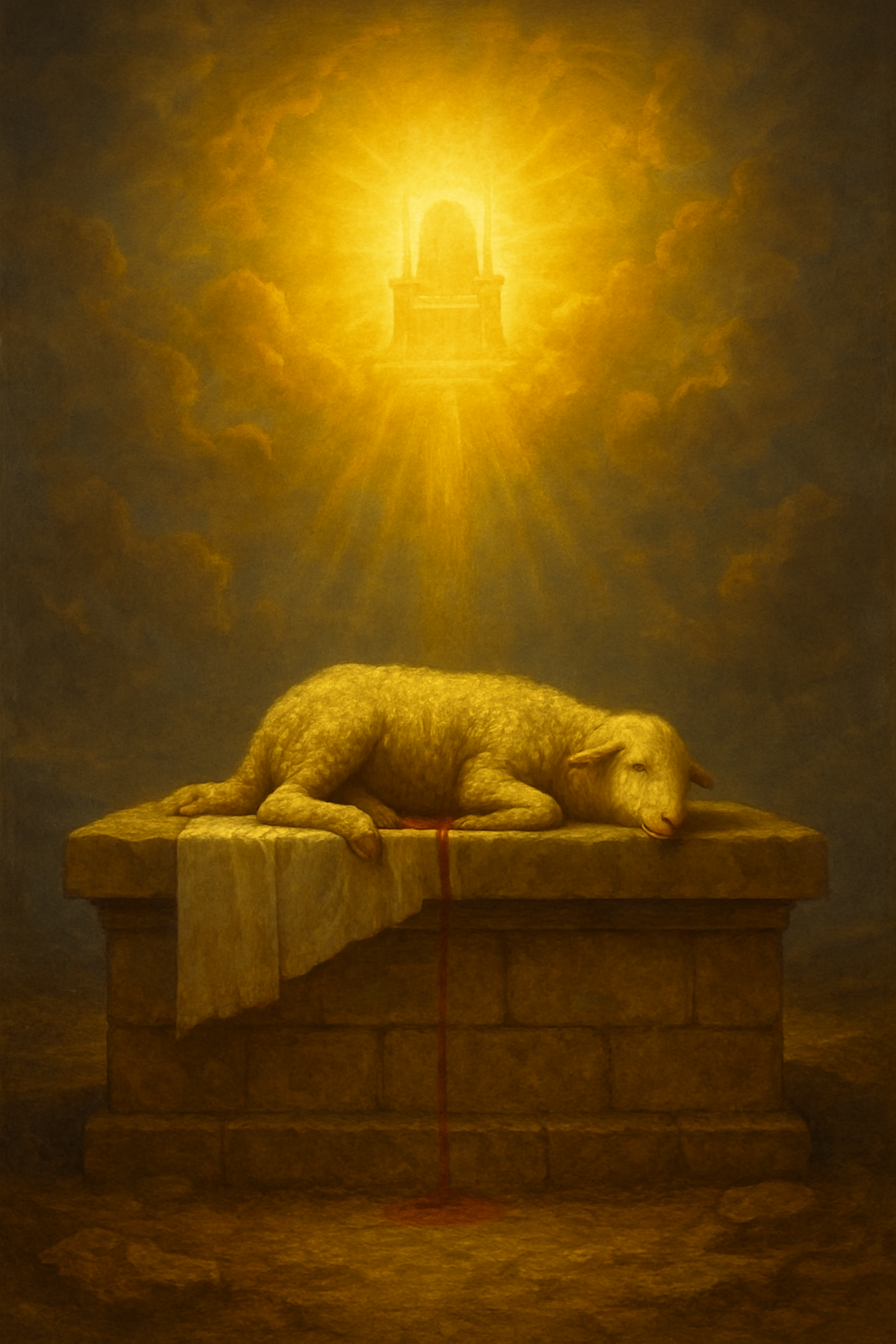
And I beheld, and, lo, in the midst of the throne and of the four beasts, and in the midst of the elders, stood a Lamb as it had been slain, having seven horns and seven eyes, which are the seven Spirits of God sent forth into all the earth. — Revelation 5:6
A priest is not a priest without a sacrifice, and a King is not a King without a throne. Jesus is our Priest King.
Introduction
By all evidence, the book of Hebrews was written before the destruction of the temple in 70 A.D. The writer refers to the temple, the priests, and the sacrifices in the present tense, showing these services were still ongoing. Yet he contrasts them with Christ’s greater ministry in the heavens—in the “greater and more perfect tabernacle”—revealing the earthly system as only a shadow pointing to Christ.
The writer explains that if Jesus were on earth, He would not be a priest, since there were already priests serving according to the Law. Even so, that priesthood was rendered ineffective by Christ’s finished work on the cross and by His ongoing ministry as our High Priest in heaven.
When the temple was destroyed in 70 A.D., the Levitical priesthood—already superseded by Christ—became completely inoperative.
THE LAW OF A CARNAL COMMANDMENT
Under the Law of Moses, only descendants of Aaron from the tribe of Levi could serve as priests. Jesus, however, is from the tribe of Judah—of the royal line of David—about whom Moses said nothing regarding priesthood (Hebrews 7:12–14).
The writer of Hebrews calls this priestly appointment “the law of a carnal commandment” (Hebrews 7:16–18), declaring it annulled because it was weak and unprofitable. Since the priesthood changed, the Law itself had to change (Hebrews 7:12).
Without priests to mediate between God and the people, the Law could not function. The priests themselves were mortal, sinful, and unable to bring people near to God. Hence, the Law “made nothing perfect” (Hebrews 7:19–23).
JESUS OUR APPOINTED PRIEST
Unlike the mortal priests of the Law, Jesus lives forever as our High Priest. He was appointed by the oath of God after being raised from the dead (Hebrews 7:21–22).
God promises never to revoke His oath concerning Jesus as our High Priest.
“The Lord has sworn and will not repent: You are a priest forever…” (Psalm 110:4)
Because of this irrevocable oath, Jesus is the guarantee of a better covenant—our eternal hope.
CHRIST: PRIEST AFTER THE ORDER OF MELCHIZEDEK
Jesus’ priesthood is not after Aaron’s line, but “after the order of Melchizedek” (Hebrews 7:11).
This phrase describes the rank and structure of His priesthood:
- Like Melchizedek, Jesus is both King and Priest—something not permitted under the Law of Moses.
- Unlike the Aaronic priests, His priesthood is eternal and unchanging.
- Jesus’ work is finished, and He is seated at the right hand of the Majesty on High (Hebrews 8:1).
THREE WAYS MELCHIZEDEK IS PRESENTED IN SCRIPTURE
Bible teacher Ruth Lasalle Specter observed that Melchizedek appears in three ways:
- In History – Genesis 14:17–23
- First priest mentioned in Scripture.
- Lived 400+ years before the Law and 1,000 years before the prophecy of Psalm 110.
- In Prophecy – Psalm 110:4
- “The Lord has sworn and will not repent: You are a priest forever after the order of Melchizedek.”
- In Doctrine – in Hebrews
- His name means “King of Righteousness”.
- Presented as a foreshadowing of Christ’s priesthood.
WHO WAS MELCHIZEDEK?
- King of Salem (Peace)—an early name for Jerusalem (Psalm 76:2).
- Ruled before Israel existed; his subjects were Gentiles.
- Met Abram after his victory over local kings (Genesis 14).
Note: Abram’s name was changed to Abraham when God gave him the covenant of circumcision.
Abraham’s Tithe
Abraham’s tenth was a customary spoil-tax of his day—10% of war spoils, not of personal wealth.
Under Moses’ Law, such a spoil-tax was 1% to the Levites, who gave a tenth of that to the priests (Numbers 31:27-30).
MELCHIZEDEK WAS NOT CHRIST
- Every priest is chosen from among men (Hebrews 5:1).
- Scripture calls Melchizedek “made like unto the Son of God” (Hebrews 7:3)—showing similarity, not identity.
- Christ’s incarnation happened once, in the fullness of time (Galatians 4:4).
WITHOUT ANCESTRY
“Without father, without mother, without descent… made like unto the Son of God; abides a priest continually.” —Hebrews 7:3
Hebrews highlights that Genesis omits any genealogy for Melchizedek—by divine design—to illustrate a priesthood apart from ancestry.
This silence in Scripture foreshadows Christ’s priesthood, established not by lineage but by God’s oath.
THE SON OF GOD, OUR GREAT HIGH PRIEST
Jesus is our sympathetic High Priest, acquainted with our sufferings:
- Tempted as a man, yet without sin.
- Suffered rejection and injustice.
- Offered prayers and intercession for us.
Through His suffering, death, resurrection, and exaltation, He became both King and Priest forever—our perfect Mediator.
KEY SCRIPTURE HIGHLIGHTS
- Hebrews 8:1 – “We have such a High Priest, who is seated at the right hand of the throne of the Majesty in the heavens.”
- Hebrews 7:24-25 – “He holds His priesthood permanently… therefore He is able to save completely those who come to God through Him.”
- Psalm 110:4 – “You are a priest forever after the order of Melchizedek.”
 Rooted and Grounded In Christ