FROM HOLY TO THE MOST HOLY

And the Lord spake unto Moses after the death of the two sons of Aaron, when they offered before the Lord, and died; And the Lord said unto Moses, Speak unto Aaron thy brother, that he come not at all times into the holy place within the vail before the mercy seat, which is upon the ark; that he die not: for I will appear in the cloud upon the mercy seat. ~ Leviticus 16:1-2

We often refer to the three areas of the tabernacle as the outer court, the inner court, and the Holy of Holies. When doing so, the distinction is often made between the inner court and the Holy of Holies as the holy place (the inner court) and the Most holy place (the Holy of Holies).

Now, the scriptures do not always use this language, so it is vitally important that we follow the context and the flow of thought to correctly understand which part of the tabernacle is being referenced in a given text. Leviticus 16:1-2 referenced above, is a perfect example.

Notice the mention of the holy place, which is a description often used to refer to the inner court. However, this text is not referring to the inner court, but the Most holy place. We know this because of the context. Aaron the High Priest, is warned not to come into this Holy place except for the appointed time, and this holy place is referred to as the holy place within the vail before the mercy seat. So the holy place referred to in this text is the Most Holy place where the glory of God rested on the mercy seat.

In contrast to the once a year entrance into the Most Holy Place, Aaron (the High Priest) was to minister daily in the inner court which is also referred to at times as the holy place.

Now, there is a traditional error that states that on the Day of Atonement the high priest entered the Holy of Holies with a rope tied around him in case he were to die in the presence of God. According to this teaching, the people would understand that the high priest had fallen dead because they would cease to hear the bells on the robe of the high priest and therefore they could retrieve his dead body with the rope tied around him without having to go into the Holy of Holies. This has been taught by many ministers, but it is entirely unscriptural, and is an extra Biblical rabbinical teaching. It is not found in scripture.

Now, let’s back up a little to get the wider picture. In Exodus 28 we are given a detailed description of the priestly garments worn by Aaron the high priest in his daily ministration within the service of the tabernacle. These garments consisted of the ephod, the curious girdle of the ephod, the breastplate of judgment, the robe (all blue) of the ephod, the mitre (bonnet) with the plate of gold, the linen coat, and the line breaches. This is the full attire of Aaron’s High Priestly garments, as well as his successors.

The garment of blue was the garment which had bells and pomegranates on the hem of it. It was this garment that made a sound that could be heard by those outside the tabernacle, but this garment was not worn into the Most Holy Place on the Day of Atonement, as we will see later in this article, but first let’s consider Aaron’s service in the inner court and the garment of blue which had the bells and the pomegranates.

And thou shalt make the robe of the ephod all of blue. And there shall be an hole in the top of it, in the midst thereof: it shall have a binding of woven work round about the hole of it, as it were the hole of an habergeon, that it be not rent. And beneath upon the hem of it thou shalt make pomegranates of blue, and of purple, and of scarlet, round about the hem thereof; and bells of gold between them round about: A golden bell and a pomegranate, a golden bell and a pomegranate, upon the hem of the robe round about. And it shall be upon Aaron to minister: and his sound shall be heard when he goeth in unto the holy place before the Lord, and when he cometh out, that he die not. ~ Exodus 28:31-35

This text is one of the references that might be used to promote the teaching that the High Priest entered the Holy of Holies on the Day of Atonement with a rope tied around him because of the use of the words, “before the Lord.” This text however, is not referring to the Most holy Place but the the inner court. The language, “before the Lord,” is used for the altar of sacrifice in the outer court, just as it is for the inner court and the Holy of Holies.

When the High Priest burned incense at the altar of incense, which was in the Holy place (the inner court), it was said to have been done before the Lord.

And thou shalt make an altar to burn incense upon: of shittim wood shalt thou make it. A cubit shall be the length thereof, and a cubit the breadth thereof; foursquare shall it be: and two cubits shall be the height thereof: the horns thereof shall be of the same. And thou shalt overlay it with pure gold, the top thereof, and the sides thereof round about, and the horns thereof; and thou shalt make unto it a crown of gold round about. And two golden rings shalt thou make to it under the crown of it, by the two corners thereof, upon the two sides of it shalt thou make it; and they shall be for places for the staves to bear it withal. And thou shalt make the staves of shittim wood, and overlay them with gold. And thou shalt put it before the vail that is by the ark of the testimony, before the mercy seat that is over the testimony, where I will meet with thee. And Aaron shall burn thereon sweet incense every morning: when he dresseth the lamps, he shall burn incense upon it. And when Aaron lighteth the lamps at even, he shall burn incense upon it, a perpetual incense before the Lord throughout your generations. Ye shall offer no strange incense thereon, nor burnt sacrifice, nor meat offering; neither shall ye pour drink offering thereon.

Notice that Aaron was to minister at this altar, every morning, and every evening. This was the part of the daily ministry of Aaron as the High Priest, and it is the place of ministry which Exodus 28 is referring to when it speaks of the robe of blue which had the bells and the pomegranates on the hem of it. The bells were separated by pomegranates because without them, the bells could make an unpleasant sound clanging together. Paul seems to allude to this in 1 Corinthians 13 when he says, Though I speak with the tongues of men and of angels, and have not charity, I am become as sounding brass, or a tinkling cymbal. ~ 1 Corinthians 13:1

Without the fruit of God’s love, being gifted with spiritual endowments bear little to no lasting fruit for God’s Kingdom. When the high priest ministered in the holy place (not the Holy of Holies) the bells with the pomegranates would make a pleasant sound and the High Priest was heard within the tabernacle as he daily carried out his service in the holy place (the inner court). However, on the Day of Atonement, the High Priest wore only the linen garments into the Holy of Holies. He did not wear the full attire of his beautiful priestly garments which included the garment of blue which had the bells and pomegranates. In Leviticus 16, which details the ministry of the High Priest on the Day of Atonement, we read the following:

He shall put on the holy linen coat, and he shall have the linen breeches upon his flesh, and shall be girded with a linen girdle, and with the linen mitre shall he be attired: these are holy garments; therefore shall he wash his flesh in water, and so put them on. ~ Leviticus 16:4

And Aaron shall come into the tabernacle of the congregation, and shall put off the linen garments, which he put on when he went into the holy place, and shall leave them there… ~ Leviticus 16:23

And the priest, whom he shall anoint, and whom he shall consecrate to minister in the priest’s office in his father’s stead, shall make the atonement, and shall put on the linen clothes, even the holy garments… ~ Leviticus 16:32

On the Day of Atonement, Aaron and his successors wore only the linen garments, and not the full attire of the Priestly garments which were worn in the daily ministrations of their office. In the book of the Revelation we find that linen garments represent, the righteousness of the saints (Revelation 19:8).

The laying aside of the full attire of the Priestly beautiful garments, and being clothed in only the linen garments, speaks to the powerful truth that when Jesus entered into this world he laid aside his glory and majesty and humbly took on human flesh, becoming servant. Paul tells us in the book of Philippians that Jesus was in the form of God, and being equal with God made himself of no reputation, and took upon him the form of a servant, and was made in the likeness of men: And being found in fashion as a man, he humbled himself, and became obedient unto death, even the death of the cross. ~ Philippians 2:6-8 

When Jesus entered the presence of God for us after his death on the cross, he did so in his pure and humble humanity. In this manner, he made intercession for us, having obtained eternal redemption for us with his own blood.

Now before we close, I would like to draw your attention to another truth that could easily be missed when reading the book of Hebrews. In Hebrews 9, the writer of Hebrews mentions all the furniture in the Holy place (the inner court), and the Most Holy Place (the Holy of Holies), except for one of the furnishings. He mentions the table of showbread, the lamp stand, and the Ark of the Covenant with the mercy seat as its covering. There is no mentioned of the altar of incense.

Is this an oversight, or is something else going on here that we need to see? I am persuaded that the writer of Hebrews intentionally leaves out the altar of incense because Hebrews 9 is written with the Day of Atonement in view. On the Day of Atonement incense was taken from the altar of incense into the Most Holy Place with the golden censer which the writer of Hebrews mentions instead of the altar. Thus the writer of Hebrews is attempting to take us from the Holy place which was preparatory, into the Most Holy because of the finished work of Christ.

For there was a tabernacle made; the first, wherein was the candlestick, and the table, and the shewbread; which is called the sanctuary (the inner court). And after the second veil, the tabernacle which is called the Holiest of all; Which had the golden censer, and the ark of the covenant overlaid round about with gold, wherein was the golden pot that had manna, and Aaron’s rod that budded, and the tables of the covenant; And over it the cherubims of glory shadowing the mercyseat; of which we cannot now speak particularly. ~ Hebrews 9:2-5

Notice that he associates the golden censer with the Holiest of all, rather than the Holy place where the High Priest ministered daily at the altar of incense. Leviticus 16, which details the ministry of the High priest on the Day of Atonement, tells us exactly what the writer of Hebrews is telling us.

And he shall take a censer full of burning coals of fire from off the altar before the Lord, and his hands full of sweet incense beaten small, and bring it within the vail: And he shall put the incense upon the fire before the Lord, that the cloud of the incense may cover the mercy seat that is upon the testimony, that he die not… ~ Leviticus 16:12-13

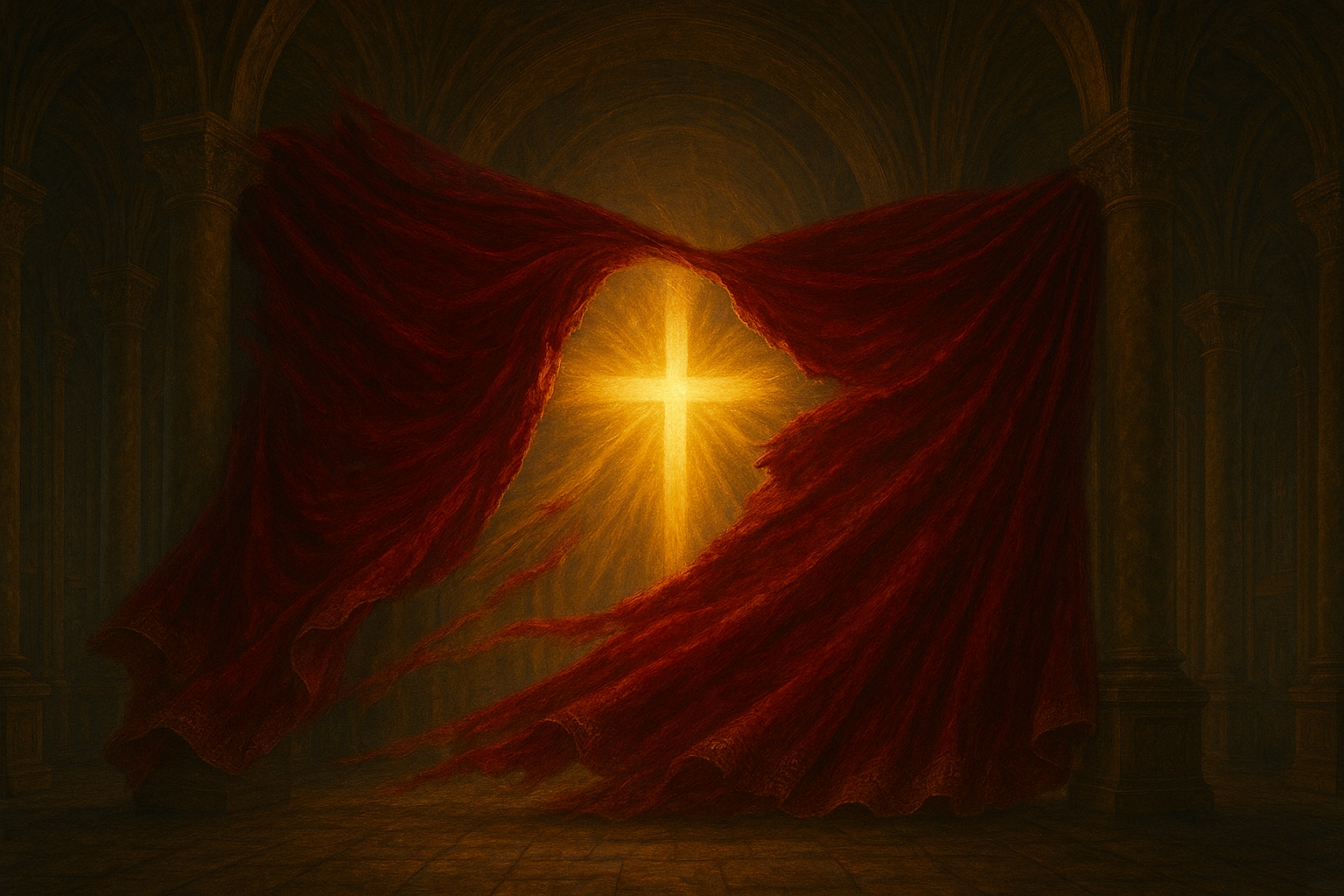
When Jesus died on the cross, the veil of the temple was torn from top to bottom (Matthew 27:51; Mark 15:38; Luke 23:45). The incense from the altar of incense represents prayer (Revelation 8:3), but no prayer but that of our High Priest could bring an end to that which separated humanity from a Holy God. Jesus is the High Priest, who took the incense (the prayers for salvation, deliverance, and redemption) from the Holy place into the Most Holy, (Heaven itself) having secured our permanent redemption with his own blood.

As we read the following in closing, keep in mind some of the things which we have covered in this article.

Now when these things were thus ordained, the priests went always into the first tabernacle, accomplishing the service of God. But into the second went the high priest alone once every year, not without blood, which he offered for himself, and for the errors of the people: The Holy Ghost this signifying, that the way into the holiest of all was not yet made manifest, while as the first tabernacle was yet standing: Which was a figure for the time then present, in which were offered both gifts and sacrifices, that could not make him that did the service perfect, as pertaining to the conscience; Which stood only in meats and drinks, and divers washings, and carnal ordinances, imposed on them until the time of reformation. But Christ being come an high priest of good things to come, by a greater and more perfect tabernacle, not made with hands, that is to say, not of this building; Neither by the blood of goats and calves, but by his own blood he entered in once into the holy place, having obtained eternal redemption for us.  For if the blood of bulls and of goats, and the ashes of an heifer sprinkling the unclean, sanctifieth to the purifying of the flesh: How much more shall the blood of Christ, who through the eternal Spirit offered himself without spot to God, purge your conscience from dead works to serve the living God? ~ Hebrews 9: 6-14 

May the Lord increase our understanding. Blessings.
MELCHIZEDEK, LEVI, AND THE PERFECT HIGH PRIEST

So also Christ glorified not himself to be made an high priest; but he that said unto him, Thou art my Son, today have I begotten thee. ~ Hebrews 5:5

Jesus was chosen by God as High Priest because of his relation to God as his begotten Son. Notice that the author of Hebrews does not simply say that Jesus was sovereignly appointed as High Priest by God, but places the appointment within the framework of “Thou art my Son, today have I begotten thee.”

This is why Melchizedek was needed in Biblical prophecy. In many ways the Levitical priesthood (the High Priests under the law) foreshadowed Christ in their daily ministrations, and in their ministry during the annual feasts such as the Day of Atonement. The Levitical priesthood foreshadowed the work of Christ offering himself as our representative and mediator, but those priests could not continue forever serving the people because they were all subject to death. Thus another Priest must serve as a model in Biblical prophecy of the eternal, on going, and never ending Priesthood of Jesus. Thus the arrival of Melchizedek in Genesis 14 and Psalm 110.

Some have thought that Melchizedek was a pre-incaration of Jesus, but the scriptures reveal only one incarnation of the Son of God. Melchizedek is a portrait of the eternal essence of Christ’s priesthood by the absence of any of Melchizedek’s pedigree, in contrast to the priests under the law whose priesthood was dependent on their ancestry.

Melchizedek was King and Priest of Salem (most likely ancient Jerusalem) in Abraham’s day. When Abraham met him, Abraham’s name had not yet been changed from Abram to Abraham.

At that time, there was no nation of Israel and Abraham did not yet have a child. Also at that time, God had not yet given Abram the covenant of circumcision. In the purest sense of the word Abram was a Gentile, for he had not yet formally entered into a covenant with God, even though he had obeyed God’s voice to leave his father’s house and go into the land that God would show him. 

It was after Abram’s encounter with Melchizedek that God entered into a covenant with him and changed his name from Abram, to Abraham. Before the priesthood that serves as mediator, representing men in the presence of God (i.e., the Levitical Priesthood), the Priesthood representing the Eternal One came to Abraham when he was yet Abram.

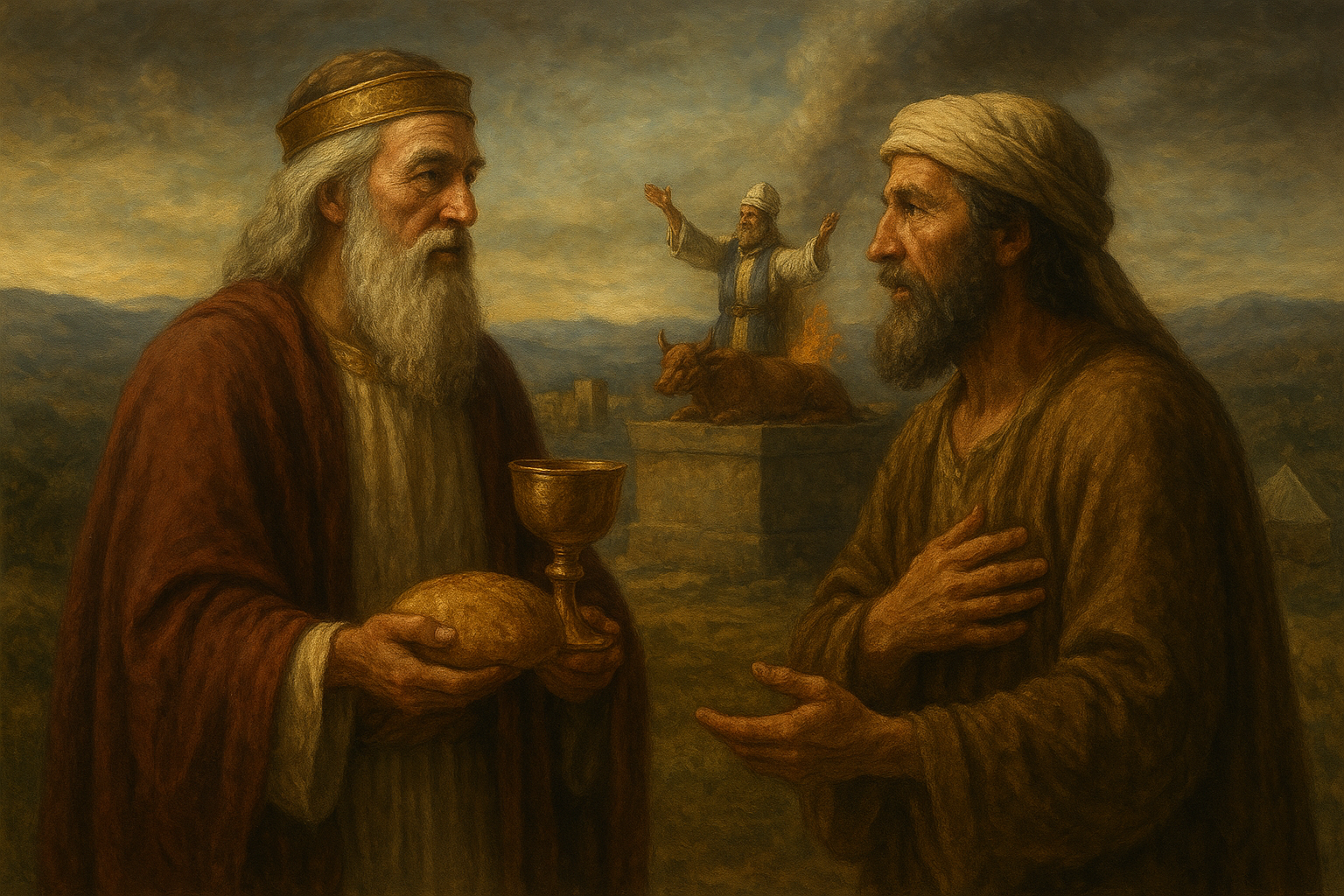
And Melchizedek king of Salem brought forth bread and wine: and he was the priest of the most high God. And he blessed him, and said, Blessed be Abram of the most high God, possessor of heaven and earth: And blessed be the most high God, which hath delivered thine enemies into thy hand. And he gave him tithes of all. ~ Genesis 14:18-20

Notice in the text above that Melchizedek, who was both a King and a priest, came to Abram and blessed him. This is a beautiful portrait showing us that Salvation comes from above and not from beneath. Before there could be a Priest among men who could bring us to God, their first had to be a Priest from above who could bring God to us. Jesus fulfills both!

Many years ago I discovered that when God gave to Moses the pattern for the tabernacle, he did not begin in the outer court where man’s approach to God begins, he started with the furniture within Holy of Holies, where God’s presence was to abide in the midst of his people.

And let them make me a sanctuary; that I may dwell among them. According to all that I shew thee, after the pattern of the tabernacle, and the pattern of all the instruments thereof, even so shall ye make it. And they shall make an ark… ~ Exodus 25:8-10a

Salvation begins with God’s approach to us and comes from above, not the other way around. Jesus is the King and Priest who first came down from above, who taking on human flesh humbled himself that he might suffer for us, to bring us near to God.

And no man hath ascended up to heaven, but he that came down from heaven, even the Son of man which is in heaven. ~ John 3:13

When the writer of Hebrews tells us that Jesus was appointed Priest by “Him who said to him, Thou art my Son, today have I begotten thee,” he isn’t merely connecting thoughts, but rather is telling us something that is deeply profound. We have a High Priest who is the King of glory. He came down from above and is the eternal one himself, yet he humbled himself and suffered for the people so that he could not only be a Priest from God’s perspective, but from man’s.

It is important that we grasp the intersection of these two powerful truths regarding Jesus’s Priesthood. This is key to unlocking the powerful truths hidden in the book of Hebrews. In Jesus, God comes to us, representing God to us. This same Jesus is our representative, our mediator, and our intercessor, in the presence of God. The two priesthoods set before us in the book of Hebrews (Melchizedek and Aaron/Levi) reveal to us the excellency of the Priesthood of Jesus. These two unite in one perfect High Priest, who not only brings us to God, but God to us!

We who enter boldly into the holiest by the blood of Jesus are purified by that same blood as a dwelling place for God. Jesus is our Great High Priest after the order of Melchizedek (his priesthood is not based on his human ancestry,) and he fulfills all that was foreshadowed by the priests who offered sacrifices for sin. May God enrich you with his wisdom and grace as you consider on these truths.

Blessing!

ETERNAL SECURITY

Last year I wrote a series of articles on the topic of eternal security, refuting some of the teachings that are prevalent within free grace theology. Of course, grace is free, but its not a gift for free loaders who choose not to follow Jesus, but only want a free ride into Heaven. Anyway, I have complied those articles into one big volume that has become Volume 2 of The Bible and Once Save Always Saved Theology. Two of the articles were already added to the the first volume. Those were, Following Jesus, and Salvation Belongs to the Bride, so those two are left out of Volume 2. I may turn these into to a study guide as well. Below is a link to both and covers much ground regarding the important topic of eternal security from a biblical perspective. Also both can be accessed by clicking on the link in the header of my site.


WHEN I CONSIDER THE HEAVENS… WHAT IS MAN THAT YOU ARE MINDFUL OF HIM?

The Psalmist wondered as to the significance of humanity in the thoughts of God in view of God’s greatness and the works of his hands.

When I consider thy heavens, the work of thy fingers, the moon and the stars, which thou hast ordained; What is man, that thou art mindful of him? For thou hast made him a little lower than the angels, and hast crowned him with glory and honour. Thou madest him to have dominion over the works of thy hands; thou hast put all things under his feet… ~ Psalm 8:3-6 

Among the many quotations from the Old Testament that the writer of Hebrews cites to speak of the magnificence of Christ, this is one of them.

For unto the angels hath he not put in subjection the world to come, whereof we speak. But one in a certain place testified, saying, What is man, that thou art mindful of him? or the son of man that thou visitest him? Thou madest him a little lower than the angels; thou crownedst him with glory and honour, and didst set him over the works of thy hands: Thou hast put all things in subjection under his feet. For in that he put all in subjection under him, he left nothing that is not put under him. But now we see not yet all things put under him. But we see Jesus, who was made a little lower than the angels for the suffering of death, crowned with glory and honour; that he by the grace of God should taste death for every man. ~ Hebrews 2:5-9

Andrew Murray writes, “It was by his union with us in our life in the flesh, by his identifying himself with our nature, that Jesus was able to claim and to work out and enter into possession of the glory God had promised to man.”

Have you ever thought about this in such a way, that Jesus has possessed the glory that God prepared for man created in his image? In Jesus we find all the fulness of what God has prepared for us.

We are living in a time in which false teachers prey on unsuspecting Christians by appealing to their need for a meaningful Christian life. This is often presented as destiny, and is often tied to donating to the false teachers’ ministry. The Bible never presents such doctrines to us. 

The goal of the Christian life is to be daily conformed to the image of Christ, to allow the Holy Spirit’s work to transform us more into the likeness of Christ. Paul says to the Colossians, ye are complete in him, which is the head of all principality and power… ~ Colossians 2:10.

This comes on the heels of Paul’s words to be firmly rooted and built up in Christ and not to have our faith in Christ supplanted through philosophy and vain deceit, after the tradition of men, after the rudiments of the world… ~ 8

In Christ, God has brought forth the perfect image of himself in humanity, and the likeness of Christ is what the Holy Spirit works within our inner life, moment by moment, as we fix our gaze of him and trust him with all our hearts.

As we consider the vastness of God’s creation, and the heavens declaring the glory of God, think how rich, and deep, and glorious his work in us by His Spirit must be, as he transforms us into the very likeness of Christ through our journey of faith?

Blessings…

HEBREWS STUDY OUTLINE

HEBREWS: A LETTER OF EXHORTATION

“I appeal to you, brothers, bear with my word of exhortation…” — Hebrews 13:22


Hebrews Is a Book of Exhortation

  • A letter written to encourage believers to persevere in faith.

Hebrews Is a Book of Warnings

  1. Warning not to neglect our great salvation.
  2. Warning not to harden our hearts against the Holy Spirit.
  3. Warning not to become slothful.
  4. Warning not to draw back into apostasy.
  5. Warning of sin and rejection of Jesus.

Hebrews Is a Book of Comparisons

  • Jesus is greater than the prophets.
  • Jesus is greater than the angels.
  • Jesus is greater than Moses.
  • Jesus is greater than Joshua.
  • Jesus’ priesthood is greater than the priesthood of Aaron.
  • The new covenant is greater than the old.
  • The blood of Christ is greater than the blood of animals.

Hebrews Is a Book of Redemption Themes

  • The sufferings and exaltation of Jesus Christ.
  • The high priestly ministry of Christ.
  • The new covenant.
  • The blood of Christ.
  • The reward for enduring faith.

OUTLINE OF HEBREWS

1. The Son Revealed (Ch. 1)

  • The Son in whom God speaks is greater than the prophets (1:1–2).
  • The glory of the Son (1:3).
  • The superiority of the Son to angels (1:4–7).
  • The exaltation of the Son (1:8–14).

2. First Warning

  • Do not neglect our great salvation (2:1–3).
  • God’s power confirming the gospel – a foretaste of the world to come (2:4–5).
  • Humanity lower than angels (2:6–8).
  • Jesus’ humanity and suffering for us (2:9–10).
  • Jesus accepts us as His brethren (2:11–13).
  • Jesus defeated the devil (2:14–15).
  • Jesus is the seed of Abraham (2:16).
  • Jesus is a merciful and faithful high priest (2:17–18).

3. Jesus, Our Apostle and High Priest (Ch. 3–4)

  • Jesus is faithful to God (3:2).
  • Jesus is greater than Moses (3:3–6).

Second Warning:

  • Do not grieve the Holy Spirit or harden your hearts (3:7–15).
  • Israel’s failure in the wilderness because of unbelief (3:16–19).
  • Entering God’s true Sabbath rest: the finished work of Christ (4:1–11).
  • Nothing hidden from Christ (4:12–13).
  • Our great high priest in the heavens (4:14–16).

4. Jesus the Perfect High Priest (Ch. 5–7)

  • The ministry of the high priest (5:1–4).
  • Christ called and perfected as high priest (5:5–11).

Third Warning:

  • Against slothfulness leading to apostasy (5:11–6:12).
  • Spiritual growth and the Word of God (5:12–14).
  • The principles of the doctrine of Christ (6:1–3).
  • Qualifications for permanent apostasy (6:4–8).
  • God’s faithfulness and encouragement (6:9–11).
  • Abraham as an example of faith and patience (6:12–15).
  • God’s promises and oaths give strong confidence (6:16–18).
  • Jesus in the presence of God is our hope (6:19–20).
  • Christ’s priesthood after the order of Melchizedek (7:1–24).

5. The New Covenant and the Blood of Christ (Ch. 8–10)

  • Jesus’ more excellent ministry (8:1–6).
  • The old covenant replaced by the new (8:7–13).
  • Earthly sanctuary and sacrifices as shadows of Christ (9:1–10).
  • Christ fulfills the foreshadowing (9:11–15).
  • Only Jesus’ blood can take away sin (9:18–22; 10:1–4).
  • Christ came to do God’s will (10:5–14).
  • The Holy Spirit testifies to Christ’s finished work (10:15–18).
  • Invitation to draw near to God by the blood of Jesus (10:19–22).
  • Exhortations to persevere in faith (10:23–25).

Fourth Warning:

  • Against willful sinning and drawing back (10:26–39).

6. Enduring Faith and Godly Living (Ch. 11–13)

  • The faith of the great cloud of witnesses (11:1–12:1).
  • Jesus, the author and finisher of our faith (12:2–4).
  • The Lord’s chastening (12:5–11).
  • Exhortation to press on in faith (12:12–14).

Fifth Warning:

  • Beware of sin and rejecting Jesus (12:15–29).

7. Practical Exhortations (Ch. 13)

  • Continue in brotherly love.
  • Show hospitality to strangers.
  • Remember prisoners and the mistreated.
  • Be faithful in marriage.
  • Be free from the love of money; trust God’s promise.
  • Remember and follow faithful leaders.
  • Avoid strange doctrines; establish hearts in grace.
  • Bear Christ’s reproach.
  • Offer the sacrifice of praise to God continually.
  • Do good and share with the needy.
  • Submit to godly leaders.
  • Pray for the writer and his companions.

Closing:

  • Benediction and encouragement (13:20–21).
  • Appeal to accept the letter as a word of exhortation (13:22).
  • Final greetings and blessing (13:23–25).

THE GLORIOUS SON OF GOD: A DEVOTIONAL STUDY OF HEBREWS CHAPTER ONE


THE SON IS GREATER THAN THE PROPHETS

“God, who at sundry times and in divers manners spake in time past unto the fathers by the prophets, Hath in these last days spoken unto us by his Son, whom he hath appointed heir of all things, by whom also he made the worlds…”Hebrews 1:1–2

Hebrews opens with a bold comparison:

  • The prophets spoke the Word of God in part and at various times.
  • Jesus the Son speaks as the full and final revelation of God.

All other prophets were servants who delivered God’s words in fragments; Jesus speaks as the very Word made flesh (John 1:1,14).
He is the heavenly Prophet foretold in Micah 5:2 and testified of by Moses (Acts 3:22–23).

John the Baptist confessed: “I am not the Christ… I am the voice of one crying in the wilderness, ‘Make straight the way of the Lord’” (John 1:20-23).

Jesus is Lord, not merely a servant—He speaks with the authority of God Himself.


THE SON IS THE HEIR OF ALL THINGS

“…whom he hath appointed heir of all things, by whom also he made the worlds; Who being the brightness of his glory, and the express image of his person, and upholding all things by the word of his power, when he had by himself purged our sins, sat down on the right hand of the Majesty on high…”Hebrews 1:2-3

Jesus is heir of all things:

  • Heir of God’s glory and nature — the express image of the Father.
  • Heir of creation and its Redeemer — through Him all things were made.
  • Heir of God’s throne“Thy throne, O God, is for ever and ever…” (1:8).

The voice of the Son is not merely spoken truth but the revealed Person of God Himself.


THE SON IS SUPERIOR TO THE ANGELS

“Being made so much better than the angels, as he hath by inheritance obtained a more excellent name than they…For unto which of the angels said he at any time, Thou art my Son, this day have I begotten thee?… And let all the angels of God worship him.”Hebrews 1:4-6

  • Angels are mighty ministering spirits, yet none was ever called “My Son.”
  • The name that sets Jesus apart is “Son”—a title of eternal relationship and divine inheritance.
  • God commands the angels to worship Him.

THE SON IS EXALTED

“…But unto the Son he saith, Thy throne, O God, is for ever and ever: a sceptre of righteousness is the sceptre of thy kingdom.”Hebrews 1:8

Though exalted above angels, He humbled Himself to take on flesh:

“Thou madest him a little lower than the angels; thou crownedst him with glory and honour…”Hebrews 2:7

He became lower than angels for our redemption (Hebrews 2:9-10; 2:16), yet after purging our sins He was exalted to the right hand of God’s Majesty.

The enthronement of the risen Son is the foundation of Hebrews. Missing this truth diminishes the whole message of the book.


THE SON IS ENTHRONED IN RIGHTEOUSNESS

“Thy throne, O God, is for ever and ever: a sceptre of righteousness is the sceptre of thy kingdom. Thou hast loved righteousness and hated iniquity; therefore God, even thy God, hath anointed thee with the oil of gladness above thy fellows.”Hebrews 1:8-9

Jesus is the King of Righteousness, fulfilling Isaiah’s prophecy:

“Of the increase of His government and peace there shall be no end… to order it, and to establish it with judgment and with justice from henceforth even for ever…”Isaiah 9:7


THE SON IS LORD FROM THE BEGINNING AND FOREVER

“Thou, Lord, in the beginning hast laid the foundation of the earth… they shall perish, but thou remainest… thou art the same, and thy years shall not fail.”Hebrews 1:10-12

Jesus is both Creator and Redeemer:

  • Creator: “by whom also He made the worlds” (1:2).
  • Redeemer: “after He had purged our sins…” (1:3).
  • Eternal Lord: “Sit on my right hand, until I make thine enemies thy footstool” (1:13).

“God… hath shined in our hearts, to give the light of the knowledge of the glory of God in the face of Jesus Christ.”2 Corinthians 4:6


REFLECTION & STUDY GUIDE

Key Themes to Meditate On

  1. The fullness of God’s revelation in His Son (Hebrews 1:1-2).
  2. The Son as Heir of all things and upholder of creation (Hebrews 1:2-3).
  3. The superiority of the Son to angels (Hebrews 1:4-6).
  4. The exaltation of Christ after His suffering (Hebrews 1:3, 8).
  5. The eternal throne and unchanging nature of the Son (Hebrews 1:8-12).

Discussion / Journal Prompts

  • How does seeing Jesus as heir of all things shape your trust in His care for you?
  • Why is it significant that God speaks to us by His Son rather than by prophets alone?
  • In what ways does the humility and exaltation of Christ inspire worship and obedience?
  • How does His eternal kingship encourage your faith in uncertain times?
  • What difference does it make to know that the same One who created the world also redeemed it?

Prayer Focus

“Lord Jesus, exalted Son of God, help me to see Your glory in all things—
to trust Your Word as final, to bow before Your throne in reverence,
and to live in the joy of Your eternal kingdom. Amen.”

The Priesthood of Jesus: A Devotional Study Series (Part 5)

KING AND PRIEST

A priest is not a priest without a sacrifice, and a King is not a King without a throne. Jesus is our Priest King,

Introduction

By all evidence, the book of Hebrews was written before the destruction of the temple in 70 A.D. The writer refers to the temple, the priests, and the sacrifices in the present tense, showing these services were still ongoing. Yet he contrasts them with Christ’s greater ministry in the heavens—in the “greater and more perfect tabernacle”—revealing the earthly system as only a shadow pointing to Christ.

The writer explains that if Jesus were on earth, He would not be a priest, since there were already priests serving according to the Law. Even so, that priesthood was rendered ineffective by Christ’s finished work on the cross and by His ongoing ministry as our High Priest in heaven.

When the temple was destroyed in 70 A.D., the Levitical priesthood—already superseded by Christ—became completely inoperative.


THE LAW OF A CARNAL COMMANDMENT

Under the Law of Moses, only descendants of Aaron from the tribe of Levi could serve as priests. Jesus, however, is from the tribe of Judah—of the royal line of David—about whom Moses said nothing regarding priesthood (Hebrews 7:12–14).

The writer of Hebrews calls this priestly appointment “the law of a carnal commandment” (Hebrews 7:16–18), declaring it annulled because it was weak and unprofitable. Since the priesthood changed, the Law itself had to change (Hebrews 7:12).

Without priests to mediate between God and the people, the Law could not function. The priests themselves were mortal, sinful, and unable to bring people near to God. Hence, the Law “made nothing perfect” (Hebrews 7:19–23).


JESUS OUR APPOINTED PRIEST

Unlike the mortal priests of the Law, Jesus lives forever as our High Priest. He was appointed by the oath of God after being raised from the dead (Hebrews 7:21–22).

God promises never to revoke His oath concerning Jesus as our High Priest.

“The Lord has sworn and will not repent: You are a priest forever…” (Psalm 110:4)

Because of this irrevocable oath, Jesus is the guarantee of a better covenant—our eternal hope.


CHRIST: PRIEST AFTER THE ORDER OF MELCHIZEDEK

Jesus’ priesthood is not after Aaron’s line, but “after the order of Melchizedek” (Hebrews 7:11).

This phrase describes the rank and structure of His priesthood:

  • Like Melchizedek, Jesus is both King and Priest—something not permitted under the Law of Moses.
  • Unlike the Aaronic priests, His priesthood is eternal and unchanging.
  • Jesus’ work is finished, and He is seated at the right hand of the Majesty on High (Hebrews 8:1).

THREE WAYS MELCHIZEDEK IS PRESENTED IN SCRIPTURE

Bible teacher Ruth Lasalle Specter observed that Melchizedek appears in three ways:

  1. In HistoryGenesis 14:17–23
    • First priest mentioned in Scripture.
    • Lived 400+ years before the Law and 1,000 years before the prophecy of Psalm 110.
  2. In ProphecyPsalm 110:4
    • “The Lord has sworn and will not repent: You are a priest forever after the order of Melchizedek.
  3. In Doctrine – in Hebrews
    • His name means “King of Righteousness”.
    • Presented as a foreshadowing of Christ’s priesthood.

WHO WAS MELCHIZEDEK?

  • King of Salem (Peace)—an early name for Jerusalem (Psalm 76:2).
  • Ruled before Israel existed; his subjects were Gentiles.
  • Met Abram after his victory over local kings (Genesis 14).

    Note: Abram’s name was changed to Abraham when God gave him the covenant of circumcision.

Abraham’s Tithe

Abraham’s tenth was a customary spoil-tax of his day—10% of war spoils, not of personal wealth.
Under Moses’ Law, such a spoil-tax was 1% to the Levites, who gave a tenth of that to the priests (Numbers 31:27-30).


MELCHIZEDEK WAS NOT CHRIST

  • Every priest is chosen from among men (Hebrews 5:1).
  • Scripture calls Melchizedek “made like unto the Son of God” (Hebrews 7:3)—showing similarity, not identity.
  • Christ’s incarnation happened once, in the fullness of time (Galatians 4:4).

WITHOUT ANCESTRY

“Without father, without mother, without descent… made like unto the Son of God; abides a priest continually.” —Hebrews 7:3

Hebrews highlights that Genesis omits any genealogy for Melchizedek—by divine design—to illustrate a priesthood apart from ancestry.

This silence in Scripture foreshadows Christ’s priesthood, established not by lineage but by God’s oath.


THE SON OF GOD, OUR GREAT HIGH PRIEST

Jesus is our sympathetic High Priest, acquainted with our sufferings:

  • Tempted as a man, yet without sin.
  • Suffered rejection and injustice.
  • Offered prayers and intercession for us.

Through His suffering, death, resurrection, and exaltation, He became both King and Priest forever—our perfect Mediator.


KEY SCRIPTURE HIGHLIGHTS

  • Hebrews 8:1 – “We have such a High Priest, who is seated at the right hand of the throne of the Majesty in the heavens.”
  • Hebrews 7:24-25 – “He holds His priesthood permanently… therefore He is able to save completely those who come to God through Him.”
  • Psalm 110:4 – “You are a priest forever after the order of Melchizedek.”

The Priesthood of Jesus: A Devotional Study Series (Part 4)

THE RESURRECTION AND EXALTATION

Key Scripture

“He shall be great, and shall be called the Son of the Highest: and the Lord God shall give unto him the throne of his father David.”
Luke 1:32


1. Introduction

When the angel Gabriel appeared to Mary in Luke’s gospel, he announced that Jesus would be given the throne of David.

Though some interpret the reign of Christ from the throne of David as a future, earthly millennial throne, the New Testament reveals that Jesus is already enthroned—at the right hand of God.

According to the apostles, the resurrection and exaltation of Jesus fulfills God’s promise that the Messiah would reign on David’s throne.


2. Peter’s Declaration in Acts 2

Peter proclaimed that the resurrection and exaltation of Jesus fulfilled David’s prophecy:

“Therefore being a prophet, and knowing that God had sworn with an oath to him, that of the fruit of his loins, according to the flesh, he would raise up Christ to sit on his throne: He seeing this before spake of the resurrection of Christ, that his soul was not left in hell, neither his flesh did see corruption. This Jesus hath God raised up, whereof we all are witnesses. Therefore being by the right hand of God exalted, and having received of the Father the promise of the Holy Ghost, he hath shed forth this, which ye now see and hear. For David is not ascended into the heavens: but he saith himself, The Lord said unto my Lord, Sit thou on my right hand, Until I make thy foes thy footstool. Therefore let all the house of Israel know assuredly, that God hath made the same Jesus, whom ye have crucified, both Lord and Christ.

Acts 2:30–36

Peter connects the promise of the throne of David directly to the resurrection and exaltation of Jesus.


3. David’s Prophetic Vision (Psalm 110)

Peter quotes Psalm 110:1:
“The Lord said unto my Lord, Sit at my right hand, until I make your enemies your footstool.”

Key Observations:

  • “The Lord said to my Lord…” — David foresaw the Messiah as his Lord, seated at the right hand of God, not on an earthly throne.
  • The author of Hebrews and Paul (1 Corinthians 15:25-26) also apply this verse to the exalted Christ.
  • Psalm 110:4 declares the Messiah to be “a priest forever after the order of Melchizedek.”

4. Christ as King and Priest

Jesus is both King (from the tribe of Judah) and Priest (after the order of Melchizedek).

Unlike the priests of the Old Covenant—who served on earth—Jesus’ priesthood is heavenly, exercised at the right hand of God.
See Hebrews 8:1-3.


5. Christ’s Present Reign as Lord

Peter proclaims:

“Let all the house of Israel know assuredly, that God hath made the same Jesus, whom ye have crucified, both LORD and Christ.”
Acts 2:36

Jesus is Lord now—already reigning in power, not waiting for a future enthronement.

“Wherefore God also hath highly exalted him… that at the name of Jesus every knee should bow… and every tongue should confess that Jesus Christ is Lord, to the glory of God the Father.”
Philippians 2:9-11


6. Seated in Majesty

  • “When he had by himself purged our sins, (He) sat down on the right hand of the Majesty on High…”Hebrews 1:3
  • “Thy throne, O God, is forever and ever: a sceptre of righteousness is the sceptre of thy kingdom.”Hebrews 1:8

Paul prays that believers understand this exaltation:

“…which He wrought in Christ, when He raised Him from the dead, and set Him at His own right hand in the heavenly places, far above all principality and power… and hath put all things under His feet…”
Ephesians 1:17-23


7. The Eternal Throne

Jesus’ throne is not temporary nor awaiting a lesser earthly throne.
He entered His glory after the resurrection (Luke 24:26; John 17:5; Acts 2:33).
He reigns now from the Heavenly Jerusalem (see Hebrews 12:22-24).

“…made Higher than the Heavens…”Hebrews 7:26

When Christ returns, He comes in the full majesty of His exalted throne, not to assume an inferior earthly seat.


Study & Reflection Questions

  1. According to Acts 2:30-36, when did Jesus begin to reign on David’s throne?
  2. How does Psalm 110 reveal that the Messiah’s throne would be heavenly, not earthly?
  3. What does it mean that Jesus is a Priest after the order of Melchizedek?
  4. How does Ephesians 1:20-23 describe Christ’s present authority?
  5. How should understanding Christ’s present reign affect your worship and faith?

Prayer Prompt

“Lord Jesus, open the eyes of my heart to see You exalted at the right hand of the Father. Help me to live in the power of Your present reign and to bow before You as Lord and King of my life. Amen.”

The Priesthood of Jesus: A Devotional Study Series (Part 3)

The Real Human Experience of Jesus

“And without controversy great is the mystery of godliness:
God was manifest in the flesh, justified in the Spirit, seen of angels, preached unto the Gentiles, believed on in the world, received up into glory.”

— 1 Timothy 3:16


Opening Thought

The gospel is unique in that it is not based on mythology. Mythological ideas can sometimes creep into our understanding of the cross of Christ.

For example, when Jesus cried out:

“My God, My God, why have You forsaken Me?”

we often search for hidden mystical explanations—as though God was punishing Him secretly.

In reality, Jesus spoke these words in the most vulnerable, fully human moment of His suffering. He truly felt abandoned, bearing the weight of death with no divine intervention to spare Him. Yet this feeling of abandonment never meant that God was unfaithful or had turned against Him.


1. The Humanity of Jesus at the Cross

  • Suffering is part of the human experience, and tragedy often causes us to wonder where God is.
  • Jesus experienced the full weight of human suffering—including the question, “Where is God?”
  • In His suffering, He was perfected to be our High Priest.

2. Scripture Insights

A. Perfected as High Priest

“For every high priest taken from among men is ordained for men in things pertaining to God…

Who in the days of his flesh… offered up prayers and supplications with strong crying and tears…

Though he were a Son, yet learned he obedience by the things which he suffered:

And being made perfect, he became the author of eternal salvation unto all them that obey him.”
— Hebrews 5:1–5

Jesus’s sufferings were not only for atonement but also part of His perfecting as our merciful High Priest.


B. Sharing in Our Humanity

“…Forasmuch then as the children are partakers of flesh and blood, he also himself likewise took part of the same…

Wherefore in all things it behoved him to be made like unto his brethren, that he might be a merciful and faithful high priest in things pertaining to God, to make reconciliation for the sins of the people. For in that he himself hath suffered being tempted, he is able to succour (help) them that are tempted.

— Hebrews 2:14, 17–18

“…We have not an high priest which cannot be touched with the feeling of our infirmities; but was in all points tempted like as we are, yet without sin. Let us therefore come boldly unto the throne of grace…” — Hebrews 4:15–16


3. Jesus’s Agony Foretold

Jesus dreaded this hour of suffering:

“Except a corn of wheat fall into the ground and die, it abideth alone: but if it die, it bringeth forth much fruit…

Now is my soul troubled; and what shall I say? Father, save me from this hour, but for this cause came I unto this hour.

— John 12:24–27


4. Gethsemane: The Weight of the Hour

“And he began to be sore amazed, and to be very heavy…

My soul is exceeding sorrowful unto death…

Abba, Father, all things are possible unto thee; take away this cup from me: nevertheless not what I will, but what thou wilt.

— Mark 14:32–42

  • His friends fell asleep during His anguish.
  • Judas betrayed Him to those who hated Him.
  • He faced beating, humiliation, and crucifixion—fully aware that the Father’s protective hand was withdrawn.
  • Yet through all this, He never sinned and never stopped trusting God.

5. The Purpose of His Suffering

“Looking unto Jesus the author and finisher of our faith; who for the joy that was set before him endured the cross, despising the shame, and is set down at the right hand of the throne of God. For consider him that endured such contradiction of sinners against himself, lest ye be wearied and faint in your minds.”
— Hebrews 12:2–4

The writer of Hebrews urges us to consider His endurance so that we will not grow weary or lose heart.

His cry, “My God, My God, why have You forsaken Me?” reflects true human agony, not divine abandonment.


6. The Apostolic Witness

The apostles preached the real human experience of Jesus, and the Holy Spirit confirmed it with power.

The mystery of godliness is that God was manifest in the flesh—not a hidden mystical act but a public suffering.

Jesus redeemed us by:

  1. Suffering in His flesh and enduring human agony.
  2. Offering His human body and blood for our salvation.
  3. Becoming our merciful and faithful High Priest, able to sympathize with us.

Takeaway

Jesus did this for two reasons:

  • He loved the Father.
  • He loved us.

Let this truth anchor your faith—Jesus’s suffering was real, His humanity was full, and His love was unfailing.

The Priesthood of Jesus: A Devotional Study Series (Part Two)

Part Two – Jesus, Our Merciful and Faithful High Priest

“Though He were a Son, yet learned He obedience by the things which He suffered: and being made perfect, He became the author of eternal salvation unto all them that obey Him …” — Hebrews 5:8-9


1. Introduction: The Paradox of the Perfect Son

Jesus was already sinless — “a lamb without spot or blemish” (1 Peter 1:18-19).
So why does Hebrews say He was “made perfect by the things He suffered”?
The answer lies not in His role as the sacrifice, but in His role as our High Priest.


2. Perfected for the Priesthood

“For every high priest taken from among men is ordained for men in things pertaining to God …

So also Christ glorified not Himself to be made an high priest …

‘Thou art a priest forever after the order of Melchizedek.’ …

Though He were a Son, yet learned He obedience by the things which He suffered: and being made perfect, He became the author of eternal salvation …”

Hebrews 5:1-9

Jesus’ suffering qualified Him to be the kind of High Priest humanity needed:
one who understands weakness, grief, betrayal, and injustice — yet without sin.


3. The God-Man Forever

The hypostatic union — Jesus is fully God and fully man — is not temporary.
From Bethlehem’s manger onward He remains true God and true man for eternity.

After the resurrection He proved His continued humanity:

“Handle Me and see; for a spirit has not flesh and bones as you see I have …
And they gave Him a piece of broiled fish … and He ate before them.


Luke 24:39-43

Our High Priest is not a distant spirit but the risen Son who still bears the marks of the cross.


4. A High Priest Who Feels Our Pain

He remembers betrayal’s sting, the mockery, the false accusations, the scourging, the cross — yet His prayer was:

“Father, forgive them; for they know not what they do.” — Luke 23:34

Therefore:

“We do not have a high priest who cannot be touched with the feeling of our infirmities, but was in all points tempted as we are — yet without sin. Let us therefore come boldly to the throne of grace …”Hebrews 4:15-16

There is nothing you suffer that lies outside His understanding or His mercy.


5. Suffering as the Crucible of Perfection

Peter reminds us:

“Christ also suffered for us, leaving us an example, that you should follow His steps … who, when He was reviled, reviled not again … but committed Himself to Him who judges righteously.”1 Peter 2:21-23

God’s purpose in the cross was not only for atonement; it was also formational
to perfect Christ as our merciful and faithful High Priest who can minister to us in every trial.


6. Sharing the Fellowship of His Sufferings

Paul longed:

“… that I may know Him and the fellowship of His sufferings …” — Philippians 3:10

We share that fellowship when we accept that Christ’s sufferings were the furnace that shaped Him for us. Therefore we can:

“… run with endurance the race that is set before us, looking unto Jesus, the author and finisher of our faith; who for the joy set before Him endured the cross, despising the shame …Consider Him … lest you be wearied and faint in your minds.”Hebrews 12:1-3


7. Grace in Our Weakness

Paul’s own thorn-in-the-flesh experience shows how Christ’s priestly ministry meets us:

“I pleaded with the Lord three times that it might depart …And He said to me, ‘My grace is sufficient for you, for My strength is made perfect in weakness.’ … For when I am weak, then I am strong.”2 Corinthians 12:7-10

The same risen High Priest who interceded for Paul now ministers grace in our frailty.


8. The Living Intercessor

“In all things it was necessary for Him to be made like His brethren, that He might be a merciful and faithful high priest in things pertaining to God … Because He Himself has suffered when tempted, He is able to help those who are being tempted.”Hebrews 2:17-18

“… He is able to save to the uttermost those who come to God through Him, since He ever lives to make intercession for them.”Hebrews 7:25

Christ’s intercession is not merely spoken prayers —
His very presence as the perfected High Priest at the Father’s right hand is our continual assurance.


9. Devotional Reflection

Prayer:
Lord Jesus, thank You for entering fully into our humanity, for suffering so that You might become the merciful and faithful High Priest we need. Teach us to come boldly to Your throne of grace, and to follow in Your steps when we ourselves must suffer for righteousness’ sake. Amen.


10. Study-Guide Questions

  1. Read Hebrews 5:1-10.
    • What specific qualifications for a high priest are mentioned?
    • How did Jesus meet those qualifications through suffering?
  2. In what way does the hypostatic union (Jesus fully God and fully man) deepen our confidence in His priestly care?
  3. According to Hebrews 4:15-16, how should we approach the throne of grace in times of weakness or temptation?
  4. Reflect on 2 Corinthians 12:7-10.
    • How can God’s grace be “sufficient” even when our thorn remains?
  5. What personal comfort do you draw from knowing Christ “ever lives to make intercession” for you?