The Priesthood of Jesus: A Devotional Study Series (Part 5)

KING AND PRIEST

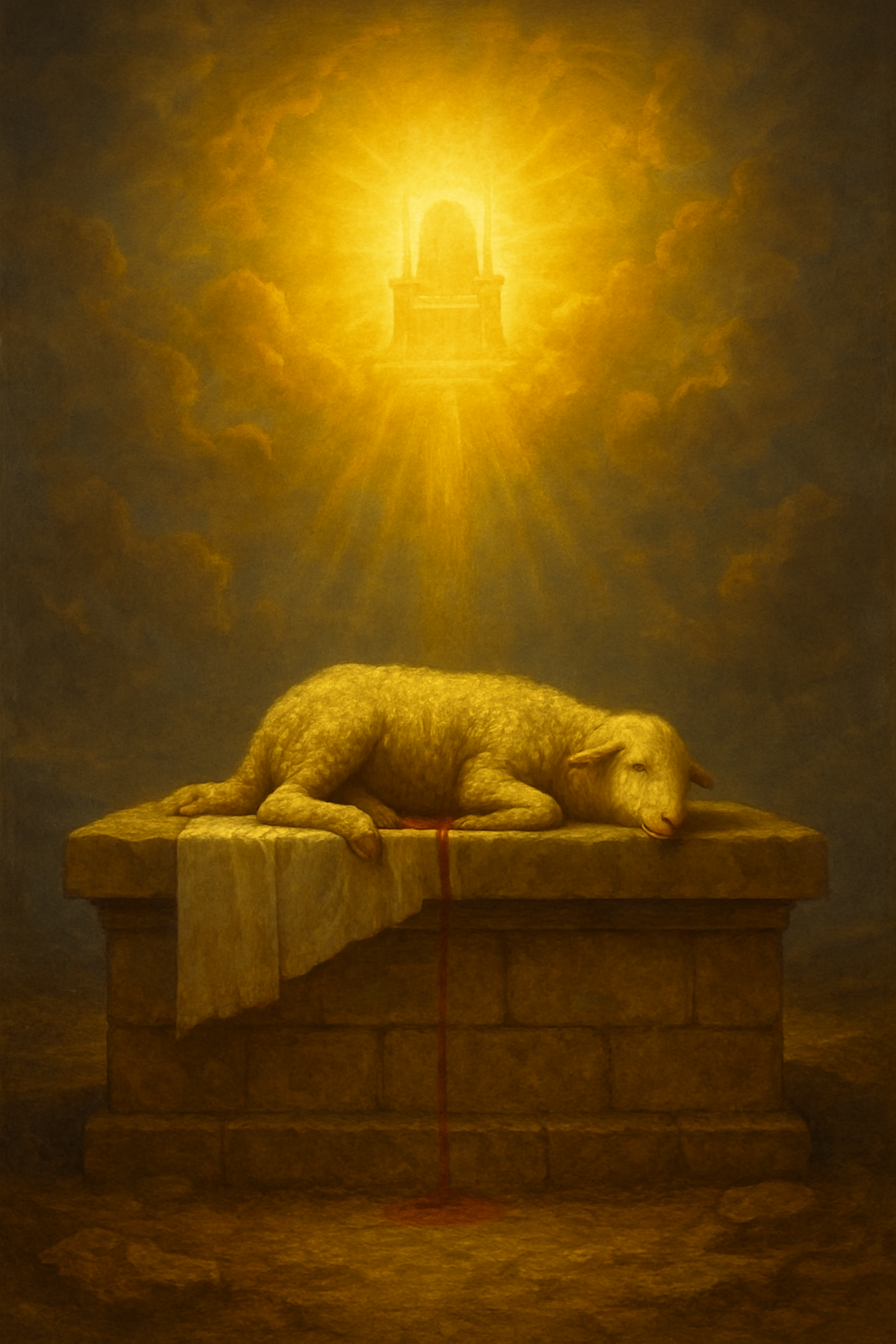
A priest is not a priest without a sacrifice, and a King is not a King without a throne. Jesus is our Priest King,

Introduction

By all evidence, the book of Hebrews was written before the destruction of the temple in 70 A.D. The writer refers to the temple, the priests, and the sacrifices in the present tense, showing these services were still ongoing. Yet he contrasts them with Christ’s greater ministry in the heavens—in the “greater and more perfect tabernacle”—revealing the earthly system as only a shadow pointing to Christ.

The writer explains that if Jesus were on earth, He would not be a priest, since there were already priests serving according to the Law. Even so, that priesthood was rendered ineffective by Christ’s finished work on the cross and by His ongoing ministry as our High Priest in heaven.

When the temple was destroyed in 70 A.D., the Levitical priesthood—already superseded by Christ—became completely inoperative.


THE LAW OF A CARNAL COMMANDMENT

Under the Law of Moses, only descendants of Aaron from the tribe of Levi could serve as priests. Jesus, however, is from the tribe of Judah—of the royal line of David—about whom Moses said nothing regarding priesthood (Hebrews 7:12–14).

The writer of Hebrews calls this priestly appointment “the law of a carnal commandment” (Hebrews 7:16–18), declaring it annulled because it was weak and unprofitable. Since the priesthood changed, the Law itself had to change (Hebrews 7:12).

Without priests to mediate between God and the people, the Law could not function. The priests themselves were mortal, sinful, and unable to bring people near to God. Hence, the Law “made nothing perfect” (Hebrews 7:19–23).


JESUS OUR APPOINTED PRIEST

Unlike the mortal priests of the Law, Jesus lives forever as our High Priest. He was appointed by the oath of God after being raised from the dead (Hebrews 7:21–22).

God promises never to revoke His oath concerning Jesus as our High Priest.

“The Lord has sworn and will not repent: You are a priest forever…” (Psalm 110:4)

Because of this irrevocable oath, Jesus is the guarantee of a better covenant—our eternal hope.


CHRIST: PRIEST AFTER THE ORDER OF MELCHIZEDEK

Jesus’ priesthood is not after Aaron’s line, but “after the order of Melchizedek” (Hebrews 7:11).

This phrase describes the rank and structure of His priesthood:

  • Like Melchizedek, Jesus is both King and Priest—something not permitted under the Law of Moses.
  • Unlike the Aaronic priests, His priesthood is eternal and unchanging.
  • Jesus’ work is finished, and He is seated at the right hand of the Majesty on High (Hebrews 8:1).

THREE WAYS MELCHIZEDEK IS PRESENTED IN SCRIPTURE

Bible teacher Ruth Lasalle Specter observed that Melchizedek appears in three ways:

  1. In HistoryGenesis 14:17–23
    • First priest mentioned in Scripture.
    • Lived 400+ years before the Law and 1,000 years before the prophecy of Psalm 110.
  2. In ProphecyPsalm 110:4
    • “The Lord has sworn and will not repent: You are a priest forever after the order of Melchizedek.
  3. In Doctrine – in Hebrews
    • His name means “King of Righteousness”.
    • Presented as a foreshadowing of Christ’s priesthood.

WHO WAS MELCHIZEDEK?

  • King of Salem (Peace)—an early name for Jerusalem (Psalm 76:2).
  • Ruled before Israel existed; his subjects were Gentiles.
  • Met Abram after his victory over local kings (Genesis 14).

    Note: Abram’s name was changed to Abraham when God gave him the covenant of circumcision.

Abraham’s Tithe

Abraham’s tenth was a customary spoil-tax of his day—10% of war spoils, not of personal wealth.
Under Moses’ Law, such a spoil-tax was 1% to the Levites, who gave a tenth of that to the priests (Numbers 31:27-30).


MELCHIZEDEK WAS NOT CHRIST

  • Every priest is chosen from among men (Hebrews 5:1).
  • Scripture calls Melchizedek “made like unto the Son of God” (Hebrews 7:3)—showing similarity, not identity.
  • Christ’s incarnation happened once, in the fullness of time (Galatians 4:4).

WITHOUT ANCESTRY

“Without father, without mother, without descent… made like unto the Son of God; abides a priest continually.” —Hebrews 7:3

Hebrews highlights that Genesis omits any genealogy for Melchizedek—by divine design—to illustrate a priesthood apart from ancestry.

This silence in Scripture foreshadows Christ’s priesthood, established not by lineage but by God’s oath.


THE SON OF GOD, OUR GREAT HIGH PRIEST

Jesus is our sympathetic High Priest, acquainted with our sufferings:

  • Tempted as a man, yet without sin.
  • Suffered rejection and injustice.
  • Offered prayers and intercession for us.

Through His suffering, death, resurrection, and exaltation, He became both King and Priest forever—our perfect Mediator.


KEY SCRIPTURE HIGHLIGHTS

  • Hebrews 8:1 – “We have such a High Priest, who is seated at the right hand of the throne of the Majesty in the heavens.”
  • Hebrews 7:24-25 – “He holds His priesthood permanently… therefore He is able to save completely those who come to God through Him.”
  • Psalm 110:4 – “You are a priest forever after the order of Melchizedek.”

The Priesthood of Jesus: A Devotional Study Series (Part Two)

Part Two – Jesus, Our Merciful and Faithful High Priest

“Though He were a Son, yet learned He obedience by the things which He suffered: and being made perfect, He became the author of eternal salvation unto all them that obey Him …” — Hebrews 5:8-9


1. Introduction: The Paradox of the Perfect Son

Jesus was already sinless — “a lamb without spot or blemish” (1 Peter 1:18-19).
So why does Hebrews say He was “made perfect by the things He suffered”?
The answer lies not in His role as the sacrifice, but in His role as our High Priest.


2. Perfected for the Priesthood

“For every high priest taken from among men is ordained for men in things pertaining to God …

So also Christ glorified not Himself to be made an high priest …

‘Thou art a priest forever after the order of Melchizedek.’ …

Though He were a Son, yet learned He obedience by the things which He suffered: and being made perfect, He became the author of eternal salvation …”

Hebrews 5:1-9

Jesus’ suffering qualified Him to be the kind of High Priest humanity needed:
one who understands weakness, grief, betrayal, and injustice — yet without sin.


3. The God-Man Forever

The hypostatic union — Jesus is fully God and fully man — is not temporary.
From Bethlehem’s manger onward He remains true God and true man for eternity.

After the resurrection He proved His continued humanity:

“Handle Me and see; for a spirit has not flesh and bones as you see I have …
And they gave Him a piece of broiled fish … and He ate before them.


Luke 24:39-43

Our High Priest is not a distant spirit but the risen Son who still bears the marks of the cross.


4. A High Priest Who Feels Our Pain

He remembers betrayal’s sting, the mockery, the false accusations, the scourging, the cross — yet His prayer was:

“Father, forgive them; for they know not what they do.” — Luke 23:34

Therefore:

“We do not have a high priest who cannot be touched with the feeling of our infirmities, but was in all points tempted as we are — yet without sin. Let us therefore come boldly to the throne of grace …”Hebrews 4:15-16

There is nothing you suffer that lies outside His understanding or His mercy.


5. Suffering as the Crucible of Perfection

Peter reminds us:

“Christ also suffered for us, leaving us an example, that you should follow His steps … who, when He was reviled, reviled not again … but committed Himself to Him who judges righteously.”1 Peter 2:21-23

God’s purpose in the cross was not only for atonement; it was also formational
to perfect Christ as our merciful and faithful High Priest who can minister to us in every trial.


6. Sharing the Fellowship of His Sufferings

Paul longed:

“… that I may know Him and the fellowship of His sufferings …” — Philippians 3:10

We share that fellowship when we accept that Christ’s sufferings were the furnace that shaped Him for us. Therefore we can:

“… run with endurance the race that is set before us, looking unto Jesus, the author and finisher of our faith; who for the joy set before Him endured the cross, despising the shame …Consider Him … lest you be wearied and faint in your minds.”Hebrews 12:1-3


7. Grace in Our Weakness

Paul’s own thorn-in-the-flesh experience shows how Christ’s priestly ministry meets us:

“I pleaded with the Lord three times that it might depart …And He said to me, ‘My grace is sufficient for you, for My strength is made perfect in weakness.’ … For when I am weak, then I am strong.”2 Corinthians 12:7-10

The same risen High Priest who interceded for Paul now ministers grace in our frailty.


8. The Living Intercessor

“In all things it was necessary for Him to be made like His brethren, that He might be a merciful and faithful high priest in things pertaining to God … Because He Himself has suffered when tempted, He is able to help those who are being tempted.”Hebrews 2:17-18

“… He is able to save to the uttermost those who come to God through Him, since He ever lives to make intercession for them.”Hebrews 7:25

Christ’s intercession is not merely spoken prayers —
His very presence as the perfected High Priest at the Father’s right hand is our continual assurance.


9. Devotional Reflection

Prayer:
Lord Jesus, thank You for entering fully into our humanity, for suffering so that You might become the merciful and faithful High Priest we need. Teach us to come boldly to Your throne of grace, and to follow in Your steps when we ourselves must suffer for righteousness’ sake. Amen.


10. Study-Guide Questions

  1. Read Hebrews 5:1-10.
    • What specific qualifications for a high priest are mentioned?
    • How did Jesus meet those qualifications through suffering?
  2. In what way does the hypostatic union (Jesus fully God and fully man) deepen our confidence in His priestly care?
  3. According to Hebrews 4:15-16, how should we approach the throne of grace in times of weakness or temptation?
  4. Reflect on 2 Corinthians 12:7-10.
    • How can God’s grace be “sufficient” even when our thorn remains?
  5. What personal comfort do you draw from knowing Christ “ever lives to make intercession” for you?