SUFFERING WITH CHRIST

Brothers, join in imitating me, and keep your eyes on those who walk according to the example you have in us. For many, of whom I have often told you and now tell you even with tears, walk as enemies of the cross of Christ. ~ Philippians 3:17-18 ESV

These words of Paul come on the heels of his intense declaration of loyalty to Christ, urging the Philippians to follow his example to count all things as loss for the sake of Christ.

Indeed, I count everything as loss because of the surpassing worth of knowing Christ Jesus my Lord. For his sake I have suffered the loss of all things and count them as rubbish, in order that I may gain Christ and be found in him, not having a righteousness of my own that comes from the law, but that which comes through faith in Christ, the righteousness from God that depends on faith— that I may know him and the power of his resurrection, and may share his sufferings, becoming like him in his death, that by any means possible I may attain the resurrection from the dead. ~ v. 8-11 ESV

Notice that Paul longed to share in the sufferings of Christ, but what does that really mean? How can we share in the sufferings of Christ? Consider Paul’s statement regarding his own suffering.

For his sake I have suffered the loss of all things and count them as rubbish, in order that I may gain Christ and be found in him.

Herein is the secret to the abundant life that Jesus spoke of in the gospel of John. Abundant life is not found in a self serving gospel. Abundant life is found in knowing Jesus, and truly knowing him comes when you are willing to suffer loss for him, or as Paul says, for the excellency of the knowledge of Christ.

The power of the cross as understood by Paul wasn’t only about what Christ had done for us, but also what Christ is able to do within us by His Spirit and power. Thus he refers to those who are enemies of the cross saying, Their end is destruction, their god is their belly, and they glory in their shame, with minds set on earthly things. ~ 3: 10

Many Western Christians have embraced an enemy of the cross message as their Christian leaders feed their understanding with desires that set their mind on earthly things, such as riches and prosperity. They speak of destiny, and how God wants to bless them with worldly possessions, while they know nothing about the call to suffer with Christ.

Their understanding of the will of God is carnal and they do not comprehend that God’s will for them is victory over the sin that persistently keeps them from conforming to the likeness of Christ. They know nothing about suffering with Christ by laying down their lives ( their selfish ambitions,) thus their declarations about God are self centered and leave their soul thirsty, empty, and void of finding the true God.

Yet for the one who seeks to know God intimately, there is a place for you in the fellowship of the cross, in fellowship with Christ’s sufferings that will bring you intimately close to God and Christ in the power of the Spirit of God.

Forasmuch then as Christ hath suffered for us in the flesh, arm yourselves likewise with the same mind: for he that hath suffered in the flesh hath ceased from sin; That he no longer should live the rest of his time in the flesh to the lusts of men, but to the will of God. ~ 1 Peter 4:1-2 KJV

We can arm ourselves in our thinking and bring our thinking in alignment with the power of Christ. Many of us struggle with various thoughts that rush to the forefront of our minds to condemn us, to entangle us in fear, and overwhelm us, but there is hope! We can arm ourselves against such thinking through the power of the cross.

When Christ went to the cross he surrendered himself completely to the Father and gave himself for us. This not only provided atonement for our salvation, but set the example for how we ought to walk as servants of Christ.

For even hereunto were ye called: because Christ also suffered for us, leaving us an example, that ye should follow his steps… ~ 1Peter 2:21|

Even as Christ surrendered himself to the will of God for us, we are called to surrender ourselves to the will of God so that the cross may have its work in us by the Spirit.

In Philippians, Paul had set before them the very mind of Christ, who though he was in the form of God, did not count equality with God a thing to be grasped, but emptied himself, by taking the form of a servant. ~ Philippians 2:6-7

The suffering that we are called to is that of laying down our lives, following Christ’s example who laid down his life for us. Our calling is that of living sacrifices, being conformed to the likeness of Christ.

Paul’s prayer for the Philippians was, if there is any encouragement in Christ, any comfort from love, any participation in the Spirit, any affection and sympathy, complete my joy by being of the same mind, having the same love, being in full accord and of one mind. Do nothing from selfish ambition or conceit, but in humility count others more significant than yourselves. Let each of you look not only to his own interests, but also to the interests of others. Have this mind among yourselves, which is yours in Christ Jesus, who, though he was in the form of God, did not count equality with God a thing to be grasped, but emptied himself, by taking the form of a servant, being born in the likeness of men. ~ Philippians 2:1-7 ESV

This is the will of God of which Peter speaks that will be experienced after we suffer in the flesh and cease from sin. The Christian life cannot be lived when self is on the throne, it can only be lived when self is on the cross. Those who are enemies of the cross will not deny themselves. The sad reality of the current Western Christian experience is that its gospel is often “self -centered,” and leads people into being enemies of the cross.

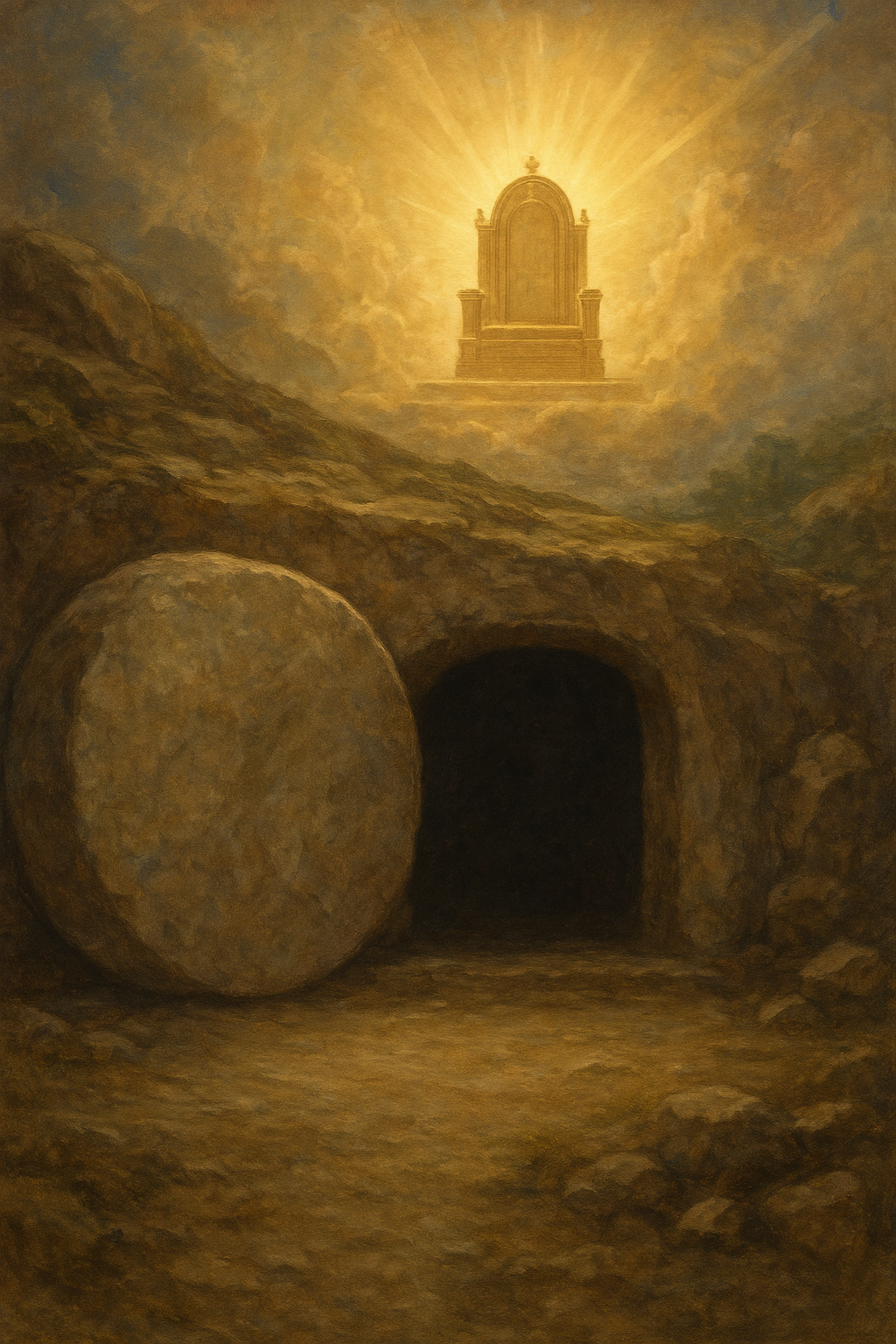
The cross does not give blessings to self, the cross puts to death, self. It is our selfish nature that God wants us to bring to the cross of Christ. This is the suffering with Christ to which we are called, and only through such suffering can we know the true joy of the resurrected life in our Christian experience. Without the cross there can be no resurrection. We cannot experience the abundant life if self is not crucified.

The mistake that too many of us make is we want the blessing of the Spirit of the Lord in the resurrection, but we refuse to allow the Spirit to bring us into suffering through the cross. Putting to death the old man and the power of sin that lurks in the mind is not easy and is often very painful, but the reward for obedience in this matter and life changing.

Notice what Paul says regarding Timothy in his letter to the Philippians.

I hope in the Lord Jesus to send Timothy to you soon, so that I too may be cheered by news of you. For I have no one like him, who will be genuinely concerned for your welfare. For they all seek their own interests, not those of Jesus Christ. But you know Timothy’s proven worth, how as a son with a father he has served with me in the gospel.  I hope therefore to send him just as soon as I see how it will go with me, and I trust in the Lord that shortly I myself will come also. ~ Philippians 2:19-24  ESV

Notice that Paul does not say, “For they all seek their own interests, not those of others. He says, For they all seek their own interests, not those of Jesus Christ.

Serving the interest of others is serving the interest of Jesus Christ!
Timothy was trustworthy as a servant of the Lord, because Timothy had been transformed by the power of the cross and he served as one who genuinely cared for the welfare of the Philippians, because he was serving Christ. He was unlike those who sought their own interests rather than the interests of Jesus Christ.

THE SPIRIT OF GOD

Recently I have been addressing a topic that I have pondered for many years, and that is the topic of the doctrine of the Trinity in view of what we read in the New Testament. Before I proceed forward, I want to be very clear that I affirm and teach the deity of Jesus Christ and the Holy Spirit. Jesus is God’s Son having the same divine nature as the Father. The Holy Spirit is the Spirit of God, thus he too is divine.

What I am addressing in these articles is how the New Testament presents to us the persons of the Father, the Son, and the Holy Spirit in contrast to some of the ideas we have based on the doctrine of the Trinity (which does vary based on the source). These articles in no way call into question the deity or unity of the Father, Son, and Holy Spirit. Rather, they are intended to help us better understand the relationship between the Father, Son, and Holy Spirit.

For example, within the doctrine of the Trinity, God is referred to as One God in three persons: God the Father, God the Son, and God the Holy Spirit. Three persons who constitute One God. The New Testament mentions God the Father (quite a few times I might add,) but It never once uses the language of God the Son or God the Holy Spirit. The Son is always referred to as the Son of God and the Holy Spirit has several titles, among them are the Spirit of God, God’s Holy Spirit, the Holy Spirit, the Spirit, and the Spirit of the Lord.

Now why does this matter? It matters because the communication of the doctrine of the Trinity with regards to the Son of God and the Holy Spirit can sometimes be in conflict with the messaging of the New Testament.

Trinitarian theology has evolved throughout church history, thus it can often be a confusing topic for people to understand, and if the truth be known, many who teach some form of trinity doctrine often have difficulty explaining it. My aim is to point us back to the scriptures, primarily the New Testament, and work through this topic so as to have a better understanding of what we actually believe.

As stated, trinitarian theology has evolved throughout church history, and when we consider the teachings of the early church Fathers, it seems to be a much purer theology than later on. The early church Fathers seemed to teach trinitarian theology within the framework that God the Father is the source because he is the one true God, with Son and Spirit proceeding from the Father and having their being because of the Father.

This aligns with what I believe the Holy Spirit has been teaching me in recent times. I hope to share more on this in a future article, but for now allow me to share a couple of excerpts from two of the early church Fathers.

Ireneaus (a.d. 120–202) writes, “Therefore neither would the Lord, nor the Holy Spirit, nor the apostles, have ever named as God, definitely and absolutely, him who was not God, unless he were truly God; nor would they have named any one in his own person Lord, except God the Father ruling over all, and His Son who has received dominion from His Father over all creation, as this passage has it: “The Lord said unto my Lord, Sit Thou at my right hand, until I make Thine enemies Thy footstool.” Here the [Scripture] represents to us the Father addressing the Son; He who gave Him the inheritance of the heathen, and subjected to Him all His enemies. Since, therefore, the Father is truly Lord, and the Son truly Lord, the Holy Spirit has fitly designated them by the title of Lord.~ Against Heresies Book 2, Chapter VI

Tertullian (a.d. 145–220) writes, “… the Father is not the same as the Son, since they differ one from the other in the mode of their being. For the Father is the entire substance, but the Son is a derivation and portion of the whole, as He Himself acknowledges: “My Father is greater than I.” In the Psalm His inferiority is described as being “a little lower than the angels.” Thus the Father is distinct from the Son, being greater than the Son, inasmuch as He who begets is one, and He who is begotten is another; He, too, who sends is one, and He who is sent is another; and He, again, who makes is one, and He through whom the thing is made is another.” ~ Against Praxeas Chapter 2

It is exciting to me to find that some of the very things that I see from the scriptures and that I have pondered and of which I am also endeavoring to communicate, are in fact, in line with the teachings of the early church Fathers. As we move forward in this study, please understand that when I reference the doctrine of the Trinity such as I do in the next paragraph, I am mainly referring to commonly held views within Trinitarian teachings. Some are not exactly in line with New Testament language and teachings. Thus we ought to examine them in view of the teachings of the New Testament, and make corrections where needed.

For example, the doctrine of the Trinity (as it has evolved) states that the Holy Spirit is God the Holy Spirit, and is distinct and identifiable from the Father. Sometimes this can be confusing as some may think that the Holy Spirit is another Spirit outside of the person of God the Father.

That was exactly the conflict that I once had in my own understanding, so my teachings on this topic are somewhat personal because I found that seeking to know the Holy Spirit, independent of the Father, led me into fear and bondage. When I began to embrace the truth that the Holy Spirit is God’s own Spirit with me, I moved from fear and bondage, to freedom, peace, joy, and comfort.

So yeah, this topic is very personal to me.

The New Testament overwhelming teaches that the Holy Spirit is God’s own Spirit with us. Consider that on the Day of Pentecost the 120 disciples of Jesus who were gathered in one accord in the upper room, were filled with the Holy Spirit.

And when the day of Pentecost was fully come, they were all with one accord in one place. And suddenly there came a sound from heaven as of a rushing mighty wind, and it filled all the house where they were sitting. And there appeared unto them cloven tongues like as of fire, and it sat upon each of them. And they were all filled with the Holy Ghost, and began to speak with other tongues, as the Spirit gave them utterance. ~ Acts 2:1-4

A few verses later Peter stood up and explained exactly what had just happened.

… this is that which was spoken by the prophet Joel; And it shall come to pass in the last days, saith God, I will pour out of my Spirit upon all flesh: and your sons and your daughters shall prophesy, and your young men shall see visions, and your old men shall dream dreams: And on my servants and on my handmaidens I will pour out in those days of my Spirit; and they shall prophesy… ~ Acts 2:16-18

Notice that God refers to the Holy Spirit who had filled the 120 disciples of Jesus as my Spirit. The Holy Spirit is God’s Spirit. He is not another Spirit distinct or separate from the Father (the Father is God in the context of Acts 2). While the (evolved) doctrine of the Trinity teaches that the Holy Spirit is distinct and identifiable from the Father, the New Testament reveals that the Holy Spirit is distinctly identified as God’s own Spirit from the Father, with us.

I will pour out of my Spirit. ~ Acts 2:17,18

And grieve not the holy Spirit of God, whereby ye are sealed unto the day of redemption. ~ Ephesians 4:30

For God hath not called us unto uncleanness, but unto holiness. He therefore that despiseth, despiseth not man, but God, who hath also given unto us his holy Spirit. ~ 1 Thessalonians 4:7-8 

For God hath not given us the spirit of fear; but of power, and of love, and of a sound mind. ~ 2 Timothy 1:7

And hereby we know that he abideth in us, by
the Spirit which he hath given us. ~ 1 John 3:24

Hereby know we that we dwell in him, and he in us, because he hath given us of his Spirit. ~ 1 John 4:13

For this cause I bow my knees unto the Father of our Lord Jesus Christ, Of whom the whole family in heaven and earth is named, That he would grant you, according to the riches of his glory, to be strengthened with might by his Spirit in the inner man… ~ Ephesians 3:14-16

Let me say it again, the doctrine of the Trinity teaches that the Holy Spirit is distinct and identifiable from the Father, the New Testament reveals that the Holy Spirit is distinctly identified as God’s own Spirit from the Father, with us.

Overwhelmingly throughout the New Testament, God is a reference to the Father. Below are just some of the texts that support this.

Grace be to you, and peace, from God our Father, and from the Lord Jesus Christ. ~ Ephesians 1:2

To all that be in Rome, beloved of God, called to be saints: Grace to you and peace from God our Father, and the Lord Jesus Christ. ~ Romans 1:7

Grace be unto you, and peace, from God our Father, and from the Lord Jesus Christ. ~  1 Corinthians 1:3

Grace be to you and peace from God our Father, and from the Lord Jesus Christ. ~ 2 Corinthians 1:2

Giving thanks always for all things unto God and the Father in the name of our Lord Jesus Christ… ~ Ephesians 5:20 

Peace be to the brethren, and love with faith, from God the Father and the Lord Jesus Christ. ~ Ephesians 6:23

Grace be unto you, and peace, from God our Father, and from the Lord Jesus Christ. ~ Philippians 1:2

Now unto God and our Father be glory for ever and ever. Amen. ~ Philippians 4:20 

To the saints and faithful brethren in Christ which are at Colosse: Grace be unto you, and peace, from God our Father and the Lord Jesus Christ. ~ Colossians 1:2 

We give thanks to God and the Father of our Lord Jesus Christ, praying always for you… ~ Colossians 1:3

And whatsoever ye do in word or deed, do all in the name of the Lord Jesus, giving thanks to God and the Father by him. ~ Colossians 3:17

Paul, and Silvanus, and Timotheus, unto the church of the Thessalonians which is in God the Father and in the Lord Jesus Christ: Grace be unto you, and peace, from God our Father, and the Lord Jesus Christ. ~ 1 Thessalonians 1:1 

Remembering without ceasing your work of faith, and labour of love, and patience of hope in our Lord Jesus Christ, in the sight of God and our Father… ~ 1 Thessalonians 1:3

Now God himself and our Father, and our Lord Jesus Christ, direct our way unto you. ~ 1 Thessalonians 3:11

Paul, and Silvanus, and Timotheus, unto the church of the Thessalonians in God our Father and the Lord Jesus Christ: Grace unto you, and peace, from God our Father and the Lord Jesus Christ. ~ 2 Thessalonians 1:1-2 

Now our Lord Jesus Christ himself, and God, even our Father, which hath loved us, and hath given us everlasting consolation and good hope through grace… ~ 2 Thessalonians 2:16

Unto Timothy, my own son in the faith: Grace, mercy, and peace, from God our Father and Jesus Christ our Lord. ~ 1 Timothy 1:2

Now, you may have noticed that God is referenced in the texts above along with the Lord Jesus Christ. We have many such texts throughout the New Testament, so we can understand based on the language that the writers of the New Testament are not referring to the trinity (Father, Son, and Holy Spirit) when they mention God in those places. Instead, they are referring to the Father. Many times throughout the New Testament when the Father and Son are mentioned in the same thought, the Father is said to be God and the Son is referred to as Lord.

Later on I may write an article on the Lordship of Jesus, and how the Lordship of Jesus speaks to Christ’s exaltation by God the Father, but that’s an article for another time. For now I want to point out to you how often we see God and Christ and the description of “God” as a reference to the Father only and not Father, Son, and Holy Spirit. For example, consider the following texts.

Being filled with the fruits of righteousness, which are by Jesus Christ, unto the glory and praise of God. ~ Philippians 1:11

Wherefore God also hath highly exalted him, and given him a name which is above every name: That at the name of Jesus every knee should bow, of things in heaven, and things in earth, and things under the earth; And that every tongue should confess that
Jesus Christ is Lord, to the glory of God the Father. ~ Philippians 2:9-11

I charge thee before God, and the Lord Jesus Christ, and the elect angels, that thou observe these things without preferring one before another, doing nothing by partiality. ~ 1 Timothy 5:21

To Timothy, my dearly beloved son: Grace, mercy, and peace, from God the Father and Christ Jesus our Lord. ~ 2 Timothy 1:2 

To Titus, mine own son after the common faith: Grace, mercy, and peace, from God the Father and the Lord Jesus Christ our Saviour… ~ Titus 1:4

Grace to you, and peace, from God our Father and the Lord Jesus Christ. ~ Philemon 1:3

Pure religion and undefiled before God and the Father is this, To visit the fatherless and widows in their affliction, and to keep himself unspotted from the world.  ~ James 1:27

For he received from God the Father honour and glory, when there came such a voice to him from the excellent glory, This is my beloved Son, in whom I am well pleased. ~ 2 Peter 1:17

Again, these are just some of the texts. Overwhelmingly, the title of God applies to the Father throughout the New Testament. If you don’t believe me, go look up every use of the word God in the New Testament and you will quickly find out that what I am telling you is the truth.

Now, if the New Testament writers thought they were referring to the Father in the vast majority of the texts where they mention God, then that ought to influence how we read the New Testament, and it ought to have some influence on our theology regarding the Trinity.

We are all familiar with the words, For God so loved the world, that he gave his only begotten Son ~ John 3:16. In this text, God is a reference to the Father and the witness of the New Testament overwhelmingly teaches us that God has a Son!

No man hath seen God at any time, the only begotten Son, which is in the bosom of the Father, he hath declared him. ~ John 1:18

And I saw, and bare record that this is the Son of God. ~ John 1:34

Nathanael answered and saith unto him, Rabbi, thou art the Son of God; thou art the King of Israel. ~ John 1:49

And Simon Peter answered and said, Thou art the Christ, the Son of the living God. ~ Matthew 16:16

I could go on listing scripture after scripture, but these will suffice for now. The point is, the description “God,” is a reference to the Father overwhelmingly throughout the New Testament, and when the Holy Spirit is referred to as the Spirit of God, we ought to know that He is the Spirit that is given to us by the Father. Not distinct from the Father, but distinctly the Spirit from the Father!

In Matthew 10 Jesus had said the following to his disciples.

But beware of men: for they will deliver you up to the councils, and they will scourge you in their synagogues; And ye shall be brought before governors and kings for my sake, for a testimony against them and the Gentiles. But when they deliver you up, take no thought how or what ye shall speak: for it shall be given you in that same hour what ye shall speak. For it is not ye that speak, but the Spirit of your Father which speaketh in you. ~ Matthew 10:17-20

Notice that Jesus uses the language of the Spirit of your Father, but In Luke’s gospel, Luke quotes Jesus as saying the Holy Ghost. And when they bring you unto the synagogues, and unto magistrates, and powers, take ye no thought how or what thing ye shall answer, or what ye shall say: For the Holy Ghost shall teach you in the same hour what ye ought to say. ~ Luke 12:11-12

We see Jesus’s words fulfilled multiple times in the book of Acts. For example, after the lame man was healed in Acts 3, Peter and John were arrested and brought before the Sanhedrin. After being questioned concerning by what power, or by what name, they had done this? We read, “Then Peter, filled with the Holy Ghost, said…”

This is one of several examples of the Spirit of the Father (the Holy Ghost) giving the disciples the very words they were to speak at a precise moment in time as they answered to the authorities.

When we teach that the Holy Spirit is a distinct person separate from the Father, I think we can do a great disservice to the people and without awareness bring harm onto the body of Christ. If we communicate that the Holy Spirit is another person (distinct and identifiable from the Father and the Son,) then we could be indoctrinating people to seek intimacy with a Spirit that doesn’t draw them into fellowship with the Father and the Son.

Personally, I think this a contributing factor to the abundance of error among many ho claim to be Spirit filled believers. When the Spirit is considered to be independently God, people can easily be led into error. When the Spirit is understood as God’s Spirit (God’s personal presence with us), everything changes and we are driven to follow after truth.

The apostle John tells us that our fellowship is with the Father and with his Son Jesus Christ. Notice that John does not mention the Holy Spirit when he tells us who our fellowship is with the Father and the Son. Yet he does tell us that we know that he abideth in us, by the Spirit which he hath given us ~ 3:24. And  we know that we dwell in him, and he in us, because he hath given us of his Spirit. ~ 1 John 4:16

The Holy Spirit draws us into fellowship with the Father and the Son. Notice how John refers to the Spirit in correlation to the Father and the Son in the follow verses.

Whosoever denieth the Son, the same hath not the Father: he that acknowledgeth the Son hath the Father also. Let that therefore abide in you, which ye have heard from the beginning. If that which ye have heard from the beginning shall remain in you, ye also shall continue in the Son, and in the Father. And this is the promise that he hath promised us, even eternal life. These things have I written unto you concerning them that seduce you. But the anointing (The Spirit) which ye have received of him abideth in you, and ye need not that any man teach you: but as the same anointing (Spirit) teacheth you of all things, and is truth, and is no lie, and even as it hath taught you, ye shall abide in him. ~ 1 John 2:23-27

The Holy Spirit is the Spirit given to us from the Father, he is the Spirit of God! He is the promise of the Father and proceeds from the Father. He abides with us and in us, to lead us into all truth and into continual abiding in fellowship with the Father and the Son.

Jesus answered and said unto him, If a man love me, he will keep my words: and my Father will love him, and we will come unto him, and make our abode with him…But the Comforter, which is the Holy Ghost, whom the Father will send in my name, he shall teach you all things, and bring all things to your remembrance, whatsoever I have said unto you. ~ John 14:23, 26

The Comforter, who is the Holy Spirit is God’s very own Spirit through whom the Father and Son make their abode with us.

Howbeit when he, the Spirit of truth, is come, he will guide you into all truth: for he shall not speak of himself; but whatsoever he shall hear, that shall he speak: and he will shew you things to come. He shall glorify me: for he shall receive of mine, and shall shew it unto you. All things that the Father hath are mine: therefore said I, that he shall take of mine, and shall shew it unto you. ~ John 16:13-15

Another clear example to understand that the Holy Spirit is indeed the Spirit of the One true God can be found in Paul’s letter to the Romans. Notice the language: But if the Spirit of him that raised up Jesus from the dead dwell in you, he that raised up Christ from the dead shall also quicken your mortal bodies by his Spirit that dwelleth in you. ~ Romans 8:11

Who is he who raised up Jesus from the dead, whose Spirit will also quicken our mortal bodies? It is God the Father. Paul says that the Spirit is the Spirit of him, and his Spirit, of the One who raised Jesus from the dead.

As stated earlier, the New Testament doesn’t employ the language God the Holy Spirit but rather, the Spirit of God.

For as many as are led by the Spirit of God, they are the sons of God. ~ Romans 8:14

The sons of God being led by the Spirit of God denotes a relationship with the Father. Now consider Paul’s words to the Corinthians.

But as it is written, Eye hath not seen, nor ear heard, neither have entered into the heart of man, the things which God hath prepared for them that love him. But God hath revealed them unto us by his Spirit: for the Spirit searcheth all things, yea, the deep things of God. For what man knoweth the things of a man, save the spirit of man which is in him? even so the things of God knoweth no man, but the Spirit of God. Now we have received, not the spirit of the world, but the spirit which is of God; that we might know the things that are freely given to us of God. Which things also we speak, not in the words which man’s wisdom teacheth, but which the Holy Ghost teacheth; comparing spiritual things with spiritual. But the natural man receiveth not the things of the Spirit of God: for they are foolishness unto him: neither can he know them, because they are spiritually discerned. But he that is spiritual judgeth all things, yet he himself is judged of no man. For who hath known the mind of the Lord, that he may instruct him? but we have the mind of Christ. ~ 1 Corinthians 2: 9-16

Notice that the Spirit of God, also referred to as the Holy Ghost, is God’s own Spirit. 

But God hath revealed them unto us by his Spirit

… we have received, not the spirit of the world, but the spirit which is of God…

The Holy Spirit is the Spirit of God.

For as many as are led by the Spirit of God, they are the sons of God. For ye have not received the spirit of bondage again to fear; but ye have received the Spirit of adoption, whereby we cry, Abba, Father. The Spirit itself beareth witness with our spirit, that we are the children of God: And if children, then heirs; heirs of God, and joint-heirs with Christ; if so be that we suffer with him, that we may be also glorified together. ~ Romans 8:14-17 

And because ye are sons, God hath sent forth the Spirit of his Son into your hearts, crying, Abba, Father. ~ Galatians 4:6

The Holy Spirit we receive through faith is also called the Spirit of Christ, and in the text above we see that he is referred to as the Spirit of his Son.

The Spirit that was upon Jesus is the Spirit of God, and the prophets in the Old Testament prophesied that the Messiah would be anointed with God’s own Spirit.

Behold my servant, whom I uphold; mine elect, in whom my soul delighteth; I have put my spirit upon him: he shall bring forth judgment to the Gentiles. ~ Isaiah 42:1

Behold my servant, whom I have chosen; my beloved, in whom my soul is well pleased: I will put my spirit upon him, and he shall shew judgment to the Gentiles. ~ Matthew 12:10

Notice that concerning Jesus God says, I will put my Spirit upon him. He does not say, “I will send another Spirit distinct from me.” No! A thousand times, no! It is God’s own Spirit that was upon Jesus.

For he whom God hath sent speaketh the words of God: for God giveth not the Spirit by measure unto him. The Father loveth the Son, and hath given all things into his hand. ~ John 3:34-25

God in the text above is the Father. Jesus spoke the words he heard by the Spirit from the Father. The Father gives the Spirit from himself. This is exactly what happened at Jesus’ baptism.

And Jesus, when he was baptized, went up straightway out of the water: and, lo, the heavens were opened unto him, and he saw the Spirit of God descending like a dove, and lighting upon him: And lo a voice from heaven, saying, This is my beloved Son, in whom I am well pleased. ~ Matthew 3:16-17

Notice again, the Holy Spirit is referred to as the Spirit of God, and not God the Holy Spirit, because the Spirit comes from God, and not distinct or separate from God himself. The Holy Spirit comes from God because he is God’s own Holy Spirit!

The Spirit of the Lord God is upon me; because the Lord hath anointed me to preach good tidings unto the meek; he hath sent me to bind up the brokenhearted, to proclaim liberty to the captives, and the opening of the prison to them that are bound… ~ Isaiah 61:1

In the text above, the Holy Spirit is referred to as the Spirit of the Lord God. The description “Lord God,” refers to God the Father throughout the New Testament. For example, consider Acts 4:24-26

And when they heard that, they lifted up their voice to God with one accord, and said, Lord, thou art God, which hast made heaven, and earth, and the sea, and all that in them is: Who by the mouth of thy servant David hast said, Why did the heathen rage, and the people imagine vain things? The kings of the earth stood up, and the rulers were gathered together against the Lord, and against his Christ. ~ Acts 4:24-26

Though Jesus is often referred to as Lord throughout the New Testament,  this text Lord is a reference to God the Father, for they were citing from Psalm 2 in their prayer.

Why do the heathen rage, and the people imagine a vain thing? The kings of the earth set themselves, and the rulers take counsel together, against the Lord, and against his anointed, saying, Let us break their bands asunder, and cast away their cords from us. He that sitteth in the heavens shall laugh: the Lord shall have them in derision. Then shall he speak unto them in his wrath, and vex them in his sore displeasure. Yet have I set my king upon my holy hill of Zion. I will declare the decree: the Lord hath said unto me, Thou art my Son; this day have I begotten thee. ~ Psalm 2:1-7

It can be easily understood from this text that the Lord is a reference to God who has his anointed, who is also his Son. In Acts 10, Peter preached, How God anointed Jesus of Nazareth with the Holy Ghost and with power: who went about doing good, and healing all that were oppressed of the devil; for God was with him. ~ Acts 10:38

Now, let’s consider some other texts that refer to the Holy Spirit that we are prone to miss if we are entrenched in Trinity doctrine. Consider that the New Testament teaches us that we are the temple of God and that the Spirit of God dwells in us.

Know ye not that ye are the temple of God, and that the Spirit of God dwelleth in you? If any man defile the temple of God, him shall God destroy; for the temple of God is holy, which temple ye are. ~ 1 Corinthians 3:16-17

Now compare this text to a similar one in Paul’s second letter to the Corinthians.

And what agreement hath the temple of God with idols? for ye are the temple of the living God; as God hath said, I will dwell in them, and walk in them; and I will be their God, and they shall be my people. Wherefore come out from among them, and be ye separate, saith the Lord, and touch not the unclean thing; and I will receive you. And will be a Father unto you, and ye shall be my sons and daughters, saith the Lord Almighty. ~ 2 Corinthians 6:16-18 

Notice that the Living God whose temple we are, is the Father ~ And will be a Father unto you, and ye shall be my sons and daughters, saith the Lord Almighty. Also notice that the one who is the Father is the God who says, I will dwell in them. How does God our Father dwell in us? By his Holy Spirit. 

Now notice the language that Paul uses regarding being justified from our old sins. And such were some of you: but ye are washed, but ye are sanctified, but ye are justified in the name of the Lord Jesus, and by the Spirit of our God. ~ 1 Corinthians 6:11

The Spirit of our God!

Now he which stablisheth us with you in Christ, and hath anointed us, is God; Who hath also sealed us, and given the earnest of the Spirit in our hearts. ~ 2 Corinthians 1:21-22

God our Father, the God and Father of our Lord Jesus Christ is the one who gives us the earnest of the Holy Spirit in our hearts.

You will not find a single text anywhere in the New Testament that refers to the Holy Spirit as God the Holy Spirit because that description teaches that the Holy Spirit is a distinct person (separate) from the Father, but the New Testament reveals that the Holy Spirit is the Spirit that comes from the Father, through Jesus Christ.

OUR HEAVENLY FATHER

I am going to begin this article by sharing a portion of a comment that I recently came across.

The person fulfilling the roll as the Father could have fulfilled the roll as the Son; the person fulfilling the roll as the Son could have fulfilled the roll as the Father…..

This statement was made on a YouTube video regarding the topic of the Trinity, and it demonstrates how a person can be led into error even by a widely accepted theological view such as the doctrine of the Trinity.

Now before we move forward, I want to make myself abundantly clear. I firmly believe and affirm the deity of our Lord Jesus Christ, so I appeal to you to think critically and not to miss what I am sharing in this article.

While I absolutely affirm and teach the deity of Jesus Christ, I do have some issues with what is often referred to as the doctrine of the Trinity, and the comment I shared above highlights the main problem I have with it. Understand this: a doctrine can be technically correct, but poorly communicated and understood, and when this happens error easily follows.

Notice that the commenter speaks of the person fulfilling the role as the Father and the person who fulfilled the role as the Son, and that each could have taken the role of the other. 

This comment represents a massive error that falls short of the most fundamental truth given to us in the New Testament, and that is that God has a Son, a divine Son. Thus the comment is in complete opposition to the gospel of our Lord Jesus Christ and it is in complete opposition to everything that Jesus ever said about the Father (both his relationship to the Father, and ours).

Now, why do I say this? I say this because the Father and the Son are not role playing. The Father and the Son are not actors in some cosmic divine theater. God, whom Jesus referred to as the Only true God, really is the Father of the Lord Jesus Christ, and Jesus really is his only begotten Son. The relationship between the Father and the Son is authentic. Jesus really is God’s offspring.

According to the apostle John, Jesus is the Son of the Father, in truth and love ~ 2 John 1:3. And Mark begins his gospel by saying, The beginning of the gospel of Jesus Christ, the Son of God ~ Mark 1:1.

Without the truth that Jesus is the Son of God, we have no gospel. If God the Father, and Jesus Christ are merely role playing, then Jesus would not truly be begotten of the Father. Yet the New Testament unequivocally tells us that Jesus is God’s only begotten Son.

The relationship between the Father and the Son is not that of two deities deciding between themselves who will be the Father and who will be the Son. If your understanding of the Trinity is anywhere near the comment I started with, then your trinitarian doctrine is wrong and you need to tear it down and start over. The best way to start over is to embrace the New Testament “as it is written” without men’s theological input, and thus build yourself up in the truth of the person of Jesus Christ who is God’s Son in every sense of the word. Allow the Holy Spirit to glorify Christ who will reveal the Father to you.

Is God truly the Father or is he not? I am convinced that the Father is who Jesus said he is. Even though Jesus told his disciples, if you have seen me you have seen the Father, Jesus wanted them to draw close to the Father and know the Father as their very own Father.

And in that day ye shall ask me nothing. Verily, verily, I say unto you, Whatsoever ye shall ask the Father in my name, he will give it you. Hitherto have ye asked nothing in my name: ask, and ye shall receive, that your joy may be full. These things have I spoken unto you in proverbs: but the time cometh, when I shall no more speak unto you in proverbs, but I shall shew you plainly of the Father. At that day ye shall ask in my name: and I say not unto you, that I will pray the Father for you: For the Father himself loveth you, because ye have loved me, and have believed that I came out from God. ~ John 16:23-27

In Matthew 7 Jesus makes a contrast between earthly Fathers and God, our heavenly Father.

Ask, and it shall be given you; seek, and ye shall find; knock, and it shall be opened unto you: For every one that asketh receiveth; and he that seeketh findeth; and to him that knocketh it shall be opened. Or what man is there of you, whom if his son asks for bread, will give him a stone? Or if he asks a fish, will he give him a serpent? If ye then, being evil, know how to give good gifts unto your children, how much more shall your Father which is in heaven give good things to them that ask him? ~ Matthew 7:7-11

Imagine what it would do for you personally, if you fully accepted that God truly is the Father of your Lord Jesus Christ, and also your Father through Christ? Remember Jesus says of the Father For the Father himself loves you, because ye have loved me, and have believed that I came out from God. ~ John 16:27

Consider the lilies how they grow: they toil not, they spin not; and yet I say unto you, that Solomon in all his glory was not arrayed like one of these. If then God so clothe the grass, which is today in the field, and tomorrow is cast into the oven; how much more will he clothe you, O ye of little faith? And seek not ye what ye shall eat, or what ye shall drink, neither be ye of doubtful mind. For all these things do the nations of the world seek after: and your Father knoweth that ye have need of these things. But rather seek ye the kingdom of God; and all these things shall be added unto you. Fear not, little flock; for it is your Father’s good pleasure to give you the kingdom. ~ Luke 12:27-32

If God were simply role playing none of us would ever truly know the love of the Father, that is, if God were only acting and not truly a Father. Thank God he is a Father, our very own Father, The Father! And he loves us because we truly are his children through Jesus Christ.

Behold, what manner of love the Father hath bestowed upon us, that we should be called the sons of God: therefore the world knoweth us not, because it knew him not. Beloved, now are we the sons of God, and it doth not yet appear what we shall be: but we know that, when he (Jesus) shall appear, we shall be like him; for we shall see him as he is. And every man that hath this hope in him purifieth himself, even as he is pure. ~ 1 John 3:1-3

THE KINGDOM OF HEAVEN, THE KINGDOM OF GOD

Are the Kingdom of Heaven and the Kingdom of God two separate kingdoms, or do these terms describe the same Kingdom. For example, does Kingdom of Heaven refer to God’s Kingdom in Heaven, in contrast to the Kingdom of God referring to a Messianic kingdom, or an invisible kingdom of God’s people on earth?

There is nothing in the New Testament that teaches such distinctions, and God’s Kingdom is not divided between Heaven and Christ. In Ephesians, Paul refers to the Kingdom as the kingdom of Christ and of God (Ephesians 5:5). In Colossians Paul describes the Kingdom as the kingdom of God’s dear son, saying that the Father has delivered us from the power of darkness and translated us into the Kingdom of his dear Son (1:13).

The phrase, Kingdom of Heaven is exclusive to Matthew’s gospel and is never found in the gospels of Mark, Luke, or John, where the gospel writers use the phrase, the Kingdom of God. In fact, the gospel of Matthew is the only portion of the New Testament where we will find the phrase, Kingdom of Heaven. The only exception is Paul’s mention of the Heavenly Kingdom in 2 Timothy.

And the Lord shall deliver me from every evil work, and will preserve me unto his heavenly kingdom: to whom be glory for ever and ever. Amen. ~ 2 Timothy 4:18

If we examine Matthew’s use of Kingdom of Heaven, we find that numerous times Matthew is talking about the same exact thing as the other gospel writers when they use the phrase, Kingdom of God.

For instance, in Matthew 5 -7 we have Matthew’s account of the sermon of the Mount. In 5:1-11 we have the portion of the sermon that we often refer to as the beatitudes. In Luke 6:20-23 we have an abbreviated version of the beatitudes. In Matthew’s account, Matthew uses the phrase, Kingdom of Heaven. In Luke’s account, Luke uses the phrase, Kingdom of God.

Blessed are the poor in spirit: for theirs is the kingdom of heaven. ~ Matthew 5:3

Looking up at His disciples, Jesus said:
“Blessed are you who are poor, for yours is the kingdom of God.” ~ Luke 6:20

In Matthew Jesus is said to have preached the Kingdom of Heaven, In Mark, Jesus is said to have preached the Kingdom of God.

From that time Jesus began to preach, and to say,  Repent: for the kingdom of heaven is at hand… And Jesus went about all Galilee, teaching in their synagogues, and preaching the gospel of the kingdom, and healing all manner of sickness and all manner of disease among the people.~ Matthew 4:17, 23

Now after that John was put in prison, Jesus came into Galilee, preaching
the gospel of the kingdom of God, And saying, The time is fulfilled, and the kingdom of God is at hand: repent ye, and believe the gospel.~ Mark 1:14-15

Notice that both Matthew and Mark refer to the gospel as the gospel of the kingdom, but Mark adds “of God.” Also notice that the Kingdom is said to be at hand, whether the Kingdom is described as the Kingdom of God, or Kingdom of Heaven, it is said to be near.

The following texts are more examples showing that Matthew is referring to the same thing as the other gospel writers when he uses the description Kingdom of Heaven.

Matthew 8:11-12 / Luke 13:28-29

And I say unto you, That many shall come from the east and west, and shall sit down with Abraham, and Isaac, and Jacob, in the kingdom of heaven. But the children of the kingdom shall be cast out into outer darkness: there shall be weeping and gnashing of teeth. ~ Matthew 8:11-12 

There shall be weeping and gnashing of teeth, when ye shall see Abraham, and Isaac, and Jacob, and all the prophets, in the kingdom of God, and you yourselves thrust out. And they shall come from the east, and from the west, and from the north, and from the south, and shall sit down in the kingdom of God. ~ Luke 13:28-29

Matthew 10:1, 7-8 / Luke 9:1-3

And when he had called unto him his twelve disciples, he gave them power against unclean spirits, to cast them out, and to heal all manner of sickness and all manner of disease…. And as ye go, preach, saying,
The kingdom of heaven is at hand. Heal the sick, cleanse the lepers, raise the dead, cast out devils: freely ye have received, freely give. ~ Matthew 10:7-8

Then he called his twelve disciples together, and gave them power and authority over all devils, and to cure diseases. And he sent them to preach
the kingdom of God, and to heal the sick. And he said unto them, Take nothing for your journey, neither staves, nor scrip, neither bread, neither money; neither have two coats apiece. ~ Luke 9:1-3 

Matthew 11:11 / Luke 7:28

Verily I say unto you, Among them that are born of women there hath not risen a greater than John the Baptist: notwithstanding he that is least in the kingdom of heaven is greater than he. 

For I say unto you, Among those that are born of women there is not a greater prophet than John the Baptist: but he that is least in the kingdom of God is greater than he. ~ Luke 7:28

Matthew 13:10-12 / Mark 4:10-12

And the disciples came, and said unto him, Why speakest thou unto them in parables? He answered and said unto them, Because it is given unto you to know the mysteries of the kingdom of heaven, but to them it is not given. For whosoever hath, to him shall be given, and he shall have more abundance: but whosoever hath not, from him shall be taken away even that he hath. ~ Matthew 13:10-12

And when he was alone, they that were about him with the twelve asked of him the parable. And he said unto them, Unto you it is given to know the mystery of the
kingdom of God: but unto them that are without, all these things are done in parables: That seeing they may see, and not perceive; and hearing they may hear, and not understand; lest at any time they should be converted, and their sins should be forgiven them. ~ Mark 4:10-12 

Matthew 13:33 / Luke 13:20-21

Another parable spake he unto them; The kingdom of heaven is like unto leaven, which a woman took, and hid in three measures of meal, till the whole was leavened. ~ Matthew 13:33

And again he said, Whereunto shall I liken the kingdom of God?  It is like leaven, which a woman took and hid in three measures of meal, till the whole was leavened. ~ Luke 13:20-21 

Matthew 19:14 / Mark 10:14, Luke 18:16

But Jesus said, Suffer little children, and forbid them not, to come unto me: for of such is the kingdom of heaven. ~ Matthew 19:14

But when Jesus saw it, he was much displeased, and said unto them, Suffer the little children to come unto me, and forbid them not: for of such is t
he kingdom of God.~ Mark 10:14

But Jesus called them unto him, and said, Suffer little children to come unto me, and forbid them not: for of such is
the kingdom of God. ~ Luke 18:16

Though Matthew often refers to the kingdom as the Kingdom of heaven, he does use the phrase, Kingdom of God on 4 different occasions (Matthew 12:28; 19:24; 21:31, 43). In Matthew 19:23-26, Matthew clearly refers to the same thing by referring to the Kingdom of Heaven as the kingdom of God

Then said Jesus unto his disciples, Verily I say unto you, That a rich man shall hardly enter into the kingdom of heaven. And again I say unto you, It is easier for a camel to go through the eye of a needle, than for a rich man to enter into the kingdom of God

Notice that this reference is repeating the same truth by underscoring that it is difficult for the rich to enter the Kingdom.

When his disciples heard it, they were exceedingly amazed, saying, Who then can be saved?
 But Jesus beheld them, and said unto them, With men this is impossible; but with God all things are possible. ~ Matthew 19:23 -26

Do we really think the disciples thought Jesus was referring to 2 different Kingdoms? Absolutely not. God’s Kingdom is not divided, and God’s Kingdom is Christ’s Kingdom, and his Heavenly Kingdom. Notice Mark’s description of the same reference as Matthew’s above.

And Jesus looked round about, and saith unto his disciples, How hardly shall they that have riches enter into the
kingdom of God! And the disciples were astonished at his words. But Jesus answereth again, and saith unto them, Children, how hard is it for them that trust in riches to enter into the kingdom of God! It is easier for a camel to go through the eye of a needle, than for a rich man to enter into the kingdom of God. And they were astonished out of measure, saying among themselves, Who then can be saved? And Jesus looking upon them saith, With men it is impossible, but not with God: for with God all things are possible. ~ Mark 10:23-27 

Blessings…

THE FATHER AND THE SON

And this is life eternal, that they might know thee the only true God, and Jesus Christ, whom thou hast sent. ~ John 17:3

The words above are taken from Jesus’ prayer in John 17, a prayer that is filled with awe and reverence for the Father. For example, in verse 11 Jesus addresses the Father as, Holy Father, just as he had taught his disciples to pray.

And it came to pass, that, as he was praying in a certain place, when he ceased, one of his disciples said unto him, Lord, teach us to pray, as John also taught his disciples. And he said unto them, When ye pray, say, Our Father which art in heaven, Hallowed be thy name… ~ Luke 11:1-2a

Later in John 17 Jesus addresses the Father as, O righteous Father (v. 25). The reverence for the Father as God that Jesus continuously models for his disciples and others would be a great study if you are looking for one, but let’s continue.

Recently I posted a short article on the topic of the Trinity, wherein I shared some of my thoughts and ponderings over the past 15 years or so. Since that article, my heart has been stirred to dive more fully into the relationship that exists within the Godhead between the Father and the Son.

Now, I want to be very clear, I am a firm believer in the deity of Jesus Christ, and I have written plenty on this site to that end, but I firmly believe that the doctrine of the Trinity often misses the true messaging of the New Testament regarding the relationship of the Father and the Son, and sometimes leads people into doctrinal error in other areas. I will touch on this later in this article, but for now let’s dive right into this topic by considering some undeniable facts given to us in the New Testament as it relates to the Father and the Son.

Fact #1: The resurrected Christ has a God.

Jesus saith unto her, Touch me not; for I am not yet ascended to my Father: but go to my brethren, and say unto them, I ascend unto my Father, and your Father; and to my God, and your God. ~ John 20:17

Notice that the resurrected Christ refers to the Father as both his Father and his God. Knowing this, we can dismiss any idea that God the Father was Jesus’s God only as a man before his death on the cross. Fact #2 will underscore this.

Facts #2: The glorified Jesus in Heaven has a God

Him that overcometh will I make a pillar in the temple of my God, and he shall go no more out: and I will write upon him the name of my God, and the name of the city of my God, which is new Jerusalem, which cometh down out of heaven from my God: and I will write upon him my new name. ~ Revelation 3:12

If in his resurrection and glorification, the Father is the God of Jesus, then we can safely conclude that God has always been the God of the Lord Jesus Christ, even before his incarnation.

In his prayer in John 17, Jesus prayed to the Father declaring that the Father is the only true God and in that prayer Jesus asked the Father to glorify him with himself and according to Jesus, this is the glory that Jesus had with the Father before the world existed.

And now, O Father, glorify thou me with thine own self with the glory which I had with thee before the world was. ~ John 17:5

In the first chapter of John, John speaks to this truth saying, No man hath seen God at any time, the only begotten Son, which is in the bosom of the Father, he hath declared him. ~ John 1:18

As we move forward, the meaning of Jesus’ request to be glorified with the Father’s own self, will hopefully become clearer. 

Fact #3: God the Father refers to the Son as God, and also himself as the God of the Son.

But unto the Son he saith, Thy throne, O God, is for ever and ever: a sceptre of righteousness is the sceptre of thy kingdom. Thou hast loved righteousness, and hated iniquity; therefore God, even thy God, hath anointed thee with the oil of gladness above thy fellows. ~ Hebrews 1:8-19

Now, consider that in the Old Testament God revealed to Israel that He is One God. 

Hear, O Israel: The Lord our God is one Lord: And thou shalt love the Lord thy God with all thine heart, and with all thy soul, and with all thy might. ~ Deuteronomy 6:4-5

This truth is carried over into the New Testament, and we see it in the ministry of Jesus and the letters written to believers.

In Mark’s gospel, we read the following:

And one of the scribes came, and having heard them reasoning together, and perceiving that he had answered them well, asked him, Which is the first commandment of all? And Jesus answered him, The first of all the commandments is, Hear, O Israel; The Lord our God is one Lord: And thou shalt love the Lord thy God with all thy heart, and with all thy soul, and with all thy mind, and with all thy strength: this is the first commandment. ~ Mark 12:28-30

Jesus repeatedly affirmed that his Father in Heaven was the One God that was revealed to Israel, and we also see the theme of the One God in the New Testament letters to believers.

Now a mediator is not a mediator of one, but God is one. ~ Galatians 3:20

For there is one God, and there is one mediator between God and men, the man Christ Jesus… ~ 1 Timothy 2:5

Notice the language, there is one God, and one mediator between God (the one God) and men, the man Jesus Christ. Thus Paul is referring to the Father (in this text) as the One God. This is consistent throughout the New Testament. 

You believe that God is one. Good for you! Even the demons believe that—and shudder. ~ James 2:19 

Seeing it is one God, which shall justify the circumcision by faith, and uncircumcision through faith. ~ Romans 3:30

At this point, those who are entrenched in the doctrine of the Trinity might respond, “yes but the One God is God in three persons.” To which I respond, “I hear you,  but is that what the New Testament writers were thinking when they used the terminology, One God?

Every time we see the expression One God, in the New Testament, it is a reference to the Father 100% of the time.

This does not mean that Jesus is not divine or that he isn’t God. He is, and we will cover that as we move forward, but for now I want you to stay with me and follow the train of thought.

Back in the late 80’s, I memorized Hebrews 1. It was sometime between 87 and 89. Since that time I have quoted the first chapter of Hebrews many times over the years. Possibly more than a thousand times in the past 35 years. I can actually quote it faster than I can read it. It’s just in me and a part of me. Yet, I have never, ever, seen the truth I am about to share with you until I started studying the topic of the relationship between the Father and the Son.

The portrait of the Father as the One true God, can be clearly understood from Hebrews chapter 1. Yet I missed it for the past 35 plus years because I wasn’t looking for it and my understanding was somewhat hindered by the doctrine of the Trinity I had been taught.

I rejoiced in my heart when I saw it just this past week. Here is the portion I am referring to.

God, who at sundry times and in divers manners spake in time past unto the fathers by the prophets, Hath in these last days spoken unto us by his Son, whom he hath appointed heir of all things, by whom also he made the worlds; Who being the brightness of his glory, and the express image of his person, and upholding all things by the word of his power, when he had by himself purged our sins, sat down on the right hand of the Majesty on high… ~ Hebrews 1:1-3

Did you see it? If not, here is what I am referring to: Notice the distinction that is made between God and the Son in the text above. It was the God, whose Son is his very image, who spoke in times past to the fathers by the prophets. Thus we can understand that this is none other than the Father of our Lord Jesus Christ.

According to the author of Hebrews, the Father of Jesus Christ is the God who spoke through the prophets in the Old Testament. Now, this is where rightly understanding the relationship between the Father and the Son becomes exciting, because it leads us into what it really means that God exalted Jesus.

Jesus is enthroned at the right hand of God, as God himself. Yet Jesus said that the Father is the only true God (John 17:3), and that the Father is his God (John 20:17 and Revelation 3:12). So how should we reconcile these two truths?

Well, there are three things we should keep in mind.

1. Jesus is the Son of the Father, and the Father is greater than the Son according to Jesus. Thus the Father is the one from whom the Son proceeds.

2. The Son is of the same exact divine nature as the Father because the Son truly is God’s Son. Jesus is sometimes referred to as the 2nd person of the trinity and there is nothing wrong with this description, but please understand that Jesus is not a second divine person simply role playing, Son of God in the redemption of humanity. Jesus is the authentic Son of God in every sense of the word. God really is his Father.

3. There are types (portraits) of Jesus Christ in the Old Testament that show us the relationship that exists between the Father and the Son. For instance, consider Joseph to whom Pharoah elevated as ruler over all of Egypt. Pharaoh said to Joseph, Thou shalt be over my house, and according unto thy word shall all my people be ruled: only in the throne will I be greater than thou. ~ Genesis 41:40

Only in the throne will I be greater than you! What a beautiful portrait of the Father and the Son and this portrait can be seen throughout the book of Hebrews as Jesus is seated at the right hand of the Majesty on High. Jesus is the one that God exalted and has made the heir over all things! The government of God’s Kingdom is on his shoulders. Ths Paul refers to Gods Kingdom as the kingdom of Christ and of God. ~ Ephesians 5:5.

Notice that Jesus is Christ and the Father is God in that expression.

Fact #4: The apostles (Paul and Peter) referred to God as the God of Jesus Christ.

Blessed be the God and Father of our Lord Jesus Christ, who hath blessed us with all spiritual blessings in heavenly places in Christ… ~ Ephesians 1:3 

Wherefore I also, after I heard of your faith in the Lord Jesus, and love unto all the saints, cease not to give thanks for you, making mention of you in my prayers; that the God of our Lord Jesus Christ, the Father of glory, may give unto you the spirit of wisdom and revelation in the knowledge of him… ~ Ephesians 1:15-17

We give thanks to God and the Father of our Lord Jesus Christ, praying always for you… ~ Colossians 1:3

Blessed be God, even the Father of our Lord Jesus Christ, the Father of mercies, and the God of all comfort… ~ 2 Corinthians 1:3

Now the God of patience and consolation grant you to be like minded one toward another according to Christ Jesus: That ye may with one mind and one mouth glorify God, even the Father of our Lord Jesus Christ. ~ Romans 15:5-6

Blessed be the God and Father of our Lord Jesus Christ, which according to his abundant mercy hath begotten us again unto a lively hope by the resurrection of Jesus Christ from the dead… ~1 Peter 1:3

Fact # 5: Paul refers to the Father as the One God.

For though there be many that are called gods, whether in heaven or in earth, (as there be gods many, and lords many,) But to us there is but one God, the Father, of whom are all things, and we in him; and one Lord Jesus Christ, by whom are all things, and we by him. ~ 1 Corinthians 8:5-6

In Ephesians, Paul tells us there is One God and Father of all, who is above all, and through all, and in you all. ~ Ephesians 4:6

Fact #6: Jesus worshipped and praised the Father.

Jesus saith unto her, Woman, believe me, the hour cometh, when ye shall neither in this mountain, nor yet at Jerusalem, worship the Father. Ye worship ye know not what: we know what we worship: for salvation is of the Jews. But the hour cometh, and now is, when the true worshippers shall worship the Father in spirit and in truth: for the Father seeketh such to worship him. God is a Spirit: and they that worship him must worship him in spirit and in truth. ~ John 4:21-24

Notice that in this section of scripture, Jesus speaks of worshipping the Father and refers to the Father as God. He also includes himself as a worshipper of the Father when he says, we know what we worship: for salvation is of the Jews.

For both he that sanctifieth and they who are sanctified are all of one: for which cause he is not ashamed to call them brethren, Saying, I will declare thy name unto my brethren, in the midst of the church will I sing praise unto thee. And again, I will put my trust in him. And again, Behold I and the children which God hath given me. ~ Hebrews 2:11-13

At that time Jesus answered and said, I thank thee, O Father, Lord of heaven and earth, because thou hast hid these things from the wise and prudent, and hast revealed them unto babes. Even so, Father: for so it seemed good in thy sight. ~ Matthew 11:25-26 

Fact #7: Jesus claimed that the Father is greater than he.

My Father, which gave them (the sheep) to me, is greater than all; and no man is able to pluck them out of my Father’s hand. ~ John 10:29

Ye have heard how I said unto you, I go away, and come again unto you. If ye loved me, ye would rejoice, because I said, I go unto the Father: for
my Father is greater than I. ~ John 14:28

Some points to consider here are as follows:

1. Jesus was sent by the Father.
2. Jesus obeyed the Father.
3. Jesus was appointed by the Father.
4. Jesus was anointed by the Father.
5. Jesus worshiped the Father.
6. Jesus testified of the Father. 
7. Jesus glorified the Father.
8. Jesus manifested the name of the Father. 
9. Jesus was chosen by the Father, and the list goes on.

Fact #8 Jesus claimed that the Father is the source of the life that is in him.

For as the Father hath life in himself; so hath he given to the Son to have life in himself… ~ John 5:26

Have you ever considered that God the Father is the source of the very divine life that is in his Son Jesus Christ. It is my firm conviction that this is why Jesus spoke of God as the Only true God. While Jesus is equal with God because he came from God, and the Holy Spirit also proceeds from te Father, the Father is the source of all life and he has granted to the Son to have life in himself even as he has life.

Please don’t think that I am trying to discredit the doctrine of the Trinity, entirely. I am simply appealing to you to allow the Lord to open your understanding so as to see truths from his word that you may have never seen before. The doctrine of the Trinity is not the inspired revelation of God to us, the scriptures are. And Jesus says following:

As the living Father hath sent me, and I live by the Father: so he that eateth me, even he shall live by me. ~ John 6:57

Notice that Jesus says he lives by the Father, the same Father that granted him to have life in himself. This is the eternal life that John speaks of when he says, That which was from the beginning, which we have heard, which we have seen with our eyes, which we have looked upon, and our hands have handled, of the Word of life; (For the life was manifested, and we have seen it, and bear witness, and shew unto you that eternal life, which was with the Father, and was manifested unto us;) That which we have seen and heard declare we unto you, that ye also may have fellowship with us: and truly our fellowship is with the Father, and with his Son Jesus Christ. ~ 1 John 1:1-3 

And this is the record, that God hath given to us eternal life, and this life is in his Son. ~ 1 John 5:11

Fact #9: Jesus claimed that he came from God.

I proceeded forth and came from God; neither came I of myself, but he sent me. ~ John 8:42 

In John 15:26, Jesus says something similar with regards to the Holy Spirit. But when the Comforter is come, whom I will send unto you from the Father, even the Spirit of truth, which proceedeth from the Father, he shall testify of me…

None of these texts contradict the deity of Christ or the personage of the Holy Spirit, but they may contradict some of our understanding and theology about the relationship between the Father and the Son, as well as how we understand the Holy Spirit. 

Paul tells us that Jesus was in the form of God, and thought it not robbery to be equal with God: But (he) made himself of no reputation, and took upon him the form of a servant, and was made in the likeness of men. ~ Philippians 2:6-7

This text clearly proves that Jesus pre-existed with God and was equal to God before his birth in Bethlehem. Yet in John 5, the Jews took exception to Jesus’ claim that God is his Father because they believed that by such claims Jesus was making himself to be equal with God.

Therefore the Jews sought the more to kill him, because he not only had broken the sabbath, but said also that God was his Father, making himself equal with God. ~ John 5:18

These texts indeed point us to the deity of Christ, and that when Jesus spoke of God as “my Father” they understood Jesus to be saying he was divine.

Similar to the language of proceeding forth and coming from God, Jesus also declared that he came out from God.

For the Father himself loveth you, because ye have loved me, and have believed that I came out from God. I came forth from the Father, and am come into the world: again, I leave the world, and go to the Father. His disciples said unto him, Lo, now speakest thou plainly, and speakest no proverb. Now are we sure that thou knowest all things, and needest not that any man should ask thee: by this we believe that thou camest forth from God. ~ John 16:27-30

Fact # 10: Jesus points us to the ONE who sent him.

Verily, verily, I say unto you, He that heareth my word, and believeth on him that sent me, hath everlasting life, and shall not come into condemnation; but is passed from death unto life. ~ John 5:24

Notice that Jesus says, He that heareth my word, and believeth on him that sent me. In John 14,  Jesus makes a distinction between he and God when he says to his disciples, Let not your heart be troubled: ye believe in God, believe also in me. ~ John 14:1

Fact # 11: Jesus claimed that he could do nothing of himself.

Then answered Jesus and said unto them, Verily, verily, I say unto you,
The Son can do nothing of himself, but what he seeth the Father do: for what things soever he doeth, these also doeth the Son likewise. ~ John 5:19

Now let’s consider the impact of this verse by reading it with the following 8 verses.

Then answered Jesus and said unto them, Verily, verily, I say unto you, The
Son can do nothing of himself, but what he seeth the Father do: for what things soever he doeth, these also doeth the Son likewise. For the Father loveth the Son, and sheweth him all things that himself doeth: and he will shew him greater works than these, that ye may marvel. For as the Father raiseth up the dead, and quickeneth them; even so the Son quickeneth whom he will. For the Father judgeth no man, but hath committed all judgment unto the Son: That all men should honour the Son, even as they honour the Father. He that honoureth not the Son honoureth not the Father which hath sent him. Verily, verily, I say unto you, He that heareth my word, and believeth on him that sent me, hath everlasting life, and shall not come into condemnation; but is passed from death unto life. Verily, verily, I say unto you, The hour is coming, and now is, when the dead shall hear the voice of the Son of God: and they that hear shall live. For as the Father hath life in himself; so hath he given to the Son to have life in himself; And hath given him authority to execute judgment also, because he is the Son of man. ~ John 5:19-27

Notice that Jesus says that the Father had given him the authority to execute judgment because he is the Son of man. Jesus often referred to himself as the Son of man. This is not simply a reference to his humanity, but his deity. I know that sounds backwards, but it refers to the Messianic truth that the Messiah would be a man from Heaven and not from this world.

In the Old Testament the prophet Daniel had a vision of the Son of Man receiving a Kingdom, along with dominion and glory as King!

I saw in the night visions, and, behold, one like the Son of man came with the clouds of heaven, and came to the Ancient of days, and they brought him near before him. And there was given him dominion, and glory, and a kingdom, that all people, nations, and languages, should serve him: his dominion is an everlasting dominion, which shall not pass away, and his kingdom that which shall not be destroyed. ~ Daniel 7: 13-14

Notice that the Son of man received dominion, glory and a Kingdom from the Ancient of Days. This is a portrait of Jesus receiving honor, glory and rule over the Kingdom of God from the Father.

This is what incited the Sanherdian in Acts 7 when Stephen declared that Jesus was the Son of man. The leaders of Israel knew that the Son of man was Messianic, and Stephen declared that Jesus, whom they had murdered, is the Messiah, the enthroned Son of Man in Heaven.

But he (Stephen,) being full of the Holy Ghost, looked up steadfastly into heaven, and saw the glory of God, and Jesus standing on the right hand of God, And said, Behold, I see the heavens opened, and the Son of man standing on the right hand of God. Then they cried out with a loud voice, and stopped their ears, and ran upon him with one accord… ~ Acts 7:55-57

In the book of the Revelation, John sees Christ in his Heavenly glory and calls him the Son of man.

And in the midst of the seven candlesticks one like unto the Son of man, clothed with a garment down to the foot, and girt about the paps with a golden girdle. ~ Revelation 1:13

And I looked, and behold a white cloud, and upon the cloud one sat like unto the Son of man, having on his head a golden crown, and in his hand a sharp sickle. ~ Revelation 14:14

When Jesus spoke with Nicodemus in John chapter 3, Jesus said, no man hath ascended up to heaven, but he that came down from heaven, even the Son of man which is in heaven.

Jesus speaks of himself as the Son of man, and the only begotten Son of God in the same context in John 3. He also describes himself as the Son of man who came down from heaven, yet is in heaven. How could this be?  Ellicott’s Commentary for English Readers may shed some light.

“If heaven is thought of as a place infinitely distant beyond clouds and sky, or as a time in the far future when this world’s life shall end, then it is indeed hard to understand what is here meant by “the Son of Man which is in heaven;” and a copyist may well have found in omission the easiest solution of the difficulty. But if heaven is something wholly different from this coldness of distance in space or time; if it is a state, a life, in which we are, which is in us–now in part, hereafter in its fulness–then may we understand and with glad hearts hold to the vital truth that the Son of Man, who came down from heaven, was ever in heaven; and that every son of man who is born of water and of the Spirit is “made a member of Christ, a child of God, and an inheritor (in the present, ??????????) of the kingdom of heaven.”

Fact # 12: Jesus claimed that he could do nothing of himself.

Then answered Jesus and said unto them, Verily, verily, I say unto you,  the Son can do nothing of himself, but what he seeth the Father do: for what things soever he doeth, these also doeth the Son likewise. ~ v.19 

I can of mine own self do nothing: as I hear, I judge: and my judgment is just; because I seek not mine own will, but the will of the Father which hath sent me. ~ v.30

Jesus sought to do the will of the Father. This truth comes through in Paul’s statement in Philippians 2 that even though Jesus was in the form of God, he made himself of no reputation and took upon himself the form of a servant and was made in the likeness of man.

This expresses that Jesus was concerned with doing the will of the Father, even when he was in the form of God before he was made in the likeness of man.

We need to be careful not to read John 5:30 with the notion that Jesus sought (in his humanity only) to do the will of the Father because as a man only, he was subordinate to God. This is not correct because Jesus is subordinate to God the Father as a man and in his divinity. The scriptures overwhelmingly point us to the truth that Jesus, though divine and equal with God, is subordinate to the Father.

For example, Paul tells us For he (God) hath put all things under his (Jesus) feet. But when he saith all things are put under him, it is manifest that he is excepted, which did put all things under him. And when all things shall be subdued unto him, then shall the Son also himself be subject unto him that put all things under him, that God may be all in all. ~ 1 Corinthians 15:27-28

That is an astounding truth! Notice that Paul makes a distinction between the Son and God. Thus God (in this text) is a reference to the Father, as is consistently the case throughout the New Testament.

Though divine, and pre-existing with the Father, the New Testament does make a distinction between God the Father as God, and Jesus his Son. Furthermore, even Jesus makes the distinction when he makes such statements as, Let not your heart be troubled: ye believe in God, believe also in me. ~ John 14:1

Fact #13: Jesus is the Man who is the Lord from Heaven.

And so it is written, The first man Adam was made a living soul; the last Adam was made a quickening spirit. Howbeit that was not first which is spiritual, but that which is natural; and afterward that which is spiritual. The first man is of the earth, earthy; the second man is the Lord from heaven. 1 Corinthians 15:45-47

Jesus is the Lord from Heaven.

Fact # 14: Jesus came in the Fathers name to reveal the Father to us.

I am come
in my Father’s name, and ye receive me not: if another shall come in his own name, him ye will receive.~ John 5:43.

I have manifested thy name unto the men which thou gavest me out of the world: thine they were, and thou gavest them me; and they have kept thy word. ~ John 17:6


Fact # 15: Jesus glorified God

I have glorified thee on the earth: I have finished the work which thou gavest me to do. ~ John 17:4

Fact #16: The glory which Jesus had before his incarnation, was that being clothed in the Father’s own being. 

And now, O Father, glorify thou me with thine own self with the glory which I had with thee before the world was. ~ John 17:5

Before his incarnation, the Son was clothed in the Father’s own glory (his own self). In his incarnation Jesus was clothed with humanity, and anointed with the Holy Spirit without measure. Now in his glorification, he has both. He is still clothed in humanity, but is now glorified again with the Father (in the Father’s own person), He is also anointed as the King and rightful heir to all that the Father has.

That my friend is shouting ground, and if I can be honest, that is what we are missing out on if we are focused solely only on the doctrine of the Trinity with regards to the relationship between the Father and the Son. This is why I think so many also miss the power and the glory in the resurrection of Jesus. It’s all interconnected, for when God raised Jesus from the dead, he declared that Jesus is his Son.

This brings me to my next point.

Fact #17, The honor and glory of Jesus is that he is God’s Son.

For we have not followed cunningly devised fables, when we made known unto you the power and coming of our Lord Jesus Christ, but were eyewitnesses of his majesty. For he received from God the Father honour and glory, when there came such a voice to him from the excellent glory, This is my beloved Son, in whom I am well pleased. And this voice which came from heaven we heard, when we were with him in the holy mount. ~ 2 Peter 1:16-18

Notice that Peter tells us that he and his fellow apostles were eyewitnesses of Jesus’s majesty. Majesty refers to magnificence and glory. In his first epistle, Peter tells us that by Jesus we believe in God, that raised him up from the dead, and gave him glory; that our faith and hope might be in God. ~ 1 Peter 1:21

In Acts 3 Peter says, The God of Abraham, and of Isaac, and of Jacob, the God of our fathers, hath glorified his Son Jesus… ~ v 13.

Notice the language, “the God of Abraham, Isaac, and Jacob, the God of our fathers” is the one who has glorified his Son Jesus. Thus Peter not only tells us that the Son has been glorified, but that the Father is the one who is referred to as the God of Abraham, Isaac, and Jacob, and the God of our fathers.

This kind of language is all over the New Testament and we miss it all the time because we are reading the Bible regarding the deity of Christ through “Trinity doctrine” lenses. It’s time to take the lenses off and ask the Father of glory, the God and Father of our Lord Jesus Christ to show us the relationship that exists between him and the Son. It will change everything and your faith in God will multiply!

There have been times over the years when certain truths have illuminated me as I sought God, and it opened the Bible to me in a whole new way. This is now one of those truths, and I see how it has been a missing link to other truths that God’s Spirit has so graciously taught me.

That Jesus is the Son of God in no way diminishes his glory. Instead, it is the honor and majesty that has been conferred on him by the One true God. Jesus is the beloved Son in whom the One true God is pleased, and because he is God’s own authentic Son, he is God as well for he is part of God himself coming out from God and being begotten of God.

God has a Son! And Paul tells us that we are to give thanks to the Father who has delivered us from the power of darkness and translated us into the Kingdom of his dear Son. Jesus is the Son in whom the Father is well pleased and Paul tells us that it pleased the Father than in him (in the Son) all fulness should dwell. The fullness mentioned there is the fullness of God, or the Godhead.

It pleases the Father that in Jesus dwells all the fullness of God’s glory, and honor, for he has enthroned Jesus at his own right hand and as  Pharaoh said to Joseph, only in the throne will I be greater than thee.

God’s Son is the express image of his own glory and Person, thus if we have seen the Son, we have seen the Father, for the Son is the image of the invisible God as Paul tells us in Colossians 1:15. 

Now, again, I am not opposed to the concept of the Trinity if we will leave it there (as a concept to help us in our understanding), but the problem is that too many have crafted entire theologies about God based on Trinity doctrines that are not in line with the messaging of the scriptures. The book, The Shack, is a perfect example of this. The mischaracterization by The Shack of the Father, the Son, and the Holy Spirit was predicated on a Trinitrian ideas, and many Christians ate it up. Some Pastors even promoted the Book, I know because I was part of a Church that embraced it and I stood against it.

Furthermore, I once came across an article in which the author claimed that all Christians believe in the doctrine of the Trinity and anyone who doesn’t isn’t a Christian, but a heretic instead.

According to this author’s statement (assuming he still believes what he said), I qualify as a borderline heretic because I am telling you what the New Testament says over and over again, that the Father is the One true God and Jesus Christ is his beloved Son. This btw, means that Jesus is also God. Yet the Father is greater because Jesus came out from the Father, proceeded from the Father, was granted to have life himself by the Father, lived by the Father,  was sent by the Father, came not to do his own will but the will of the Father and the list goes on.

I dare you to read the New Testament again and see how the writers make a clear distinction between the Father as God, and the Son. All that the Son has comes from the Father according to the New Testament.

There is so much more to say on this topic, but let’s start winding it down for this article by taking a look at John 17 again, and notice the things that Jesus says to his God, the Father.

These words spake Jesus, and lifted up his eyes to heaven, and said, Father, the hour is come; glorify thy Son, that thy Son also may glorify thee… ~ v.1 

As thou hast given him power over all flesh, that he should give eternal life to as many as thou hast given him. ~ v. 2

And this is life eternal, that they might know thee the only true God, and Jesus Christ, whom thou hast sent. ~ v. 3 

I have glorified thee on the earth: I have finished the work which thou gavest me to do. ~ v. 4 

And now, O Father, glorify thou me with thine own self with the glory which I had with thee before the world was. ~ v. 5 

I have manifested thy name unto the men which thou gavest me out of the world: thine they were, and thou gavest them me; and they have kept thy word. ~ v.6

Now they have known that all things whatsoever thou hast given me are of thee. ~ v. 7 

For I have given unto them the words which thou gavest me; and they have received them, and have known surely that I came out from thee, and they have believed that thou didst send me. ~ v. 8 

I pray for them: I pray not for the world, but for them which thou hast given me; for they are thine.  ~ v. 9 

And all mine are thine, and thine are mine; and I am glorified in them. ~ v. 10

And now I am no more in the world, but these are in the world, and I come to thee. Holy Father, keep through thine own name those whom thou hast given me, that they may be one, as we are. ~ v. 11

While I was with them in the world, I kept them in thy name: those that thou gavest me I have kept, and none of them is lost, but the son of perdition; that the scripture might be fulfilled. ~ v.12 

And now come I to thee; and these things I speak in the world, that they might have my joy fulfilled in themselves. ~ v. 13

I have given them thy word; and the world hath hated them, because they are not of the world, even as I am not of the world. ~ v. 14 

I pray not that thou shouldest take them out of the world, but that thou shouldest keep them from the evil. ~ v.15 

They are not of the world, even as I am not of the world. ~ v.16 

Sanctify them through thy truth: thy word is truth. ~ v. 17

As thou hast sent me into the world, even so have I also sent them into the world. ~ v. 18

And for their sakes I sanctify myself, that they also might be sanctified through the truth. ~ v. 19

Neither pray I for these alone, but for them also which shall believe on me through their word; ~ v. 20 

That they all may be one; as thou, Father, art in me, and I in thee, that they also may be one in us: that the world may believe that thou hast sent me. ~ v. 21

Now let’s stop for just a moment and notice how intimate the love that Jesus has for us is. In Hebrews 2, we read the following:

For both he that sanctifieth ( that’s Jesus) and they who are sanctified (that’s us) are all of one (that’s God): for which cause he is not ashamed to call them brethren.

Because of Jesus, who is God’s only begotten Son (of the same divine nature as the Father), we now share in the privilege of becoming God’s children through Jesus Christ who was sanctified for us, and who sanctifies us. Whereas Christ is the only begotten we are reborn through faith in Christ and adopted as children of God. Christ is the heir and the firstborn, and we become heirs with him as children of God. Yet only Christ bears the same divine nature as the Father and perfectly mirrors the Father’s person to us.

Now, notice what Jesus prays for his brethren.

And the glory which thou gavest me (the glory of being God’s Son) I have given them; that they may be one, even as we are one:  I in them, and thou in me, that they may be made perfect in one; and that the world may know that thou hast sent me, and hast loved them, as thou hast loved me. ~ v. 22-23

Wait! Stop! Did Jesus just say that the father loves us as he loved Jesus? It sure sounds like it. Remember John tells us in his first epistle, Behold, what manner of love the Father hath bestowed upon us, that we should be called the sons of God: therefore the world knoweth us not, because it knew him not. Beloved, now are we the sons of God, and it doth not yet appear what we shall be: but we know that, when he shall appear, we shall be like him; for we shall see him as he is. And every man that hath this hope in him purifieth himself, even as he is pure. ~ 1 John 3:1-3

These words align with Jesus’ words in John 17. Now, let’s close with verse 22;26.Father, I will that they also, whom thou hast given me, be with me where I am; that they may behold my glory, which thou hast given me: for thou lovedst me before the foundation of the world. O righteous Father, the world hath not known thee: but I have known thee, and these have known that thou hast sent me. And I have declared unto them thy name, and will declare it: that the love wherewith thou hast loved me may be in them, and I in them. v. 22 -26

Blessings…

THE TRINITY

In recent years (the past 10 years or more), I have pondered my understanding of the doctrine of the Trinity from time to time. This has been one of those topics that I have been very reluctant to address. I am not sure if I can adequately articulate what I have come to believe based on scripture and the comfort of the Lord, but maybe I will get better over time.

I absolutely believe that God is revealed to us in three persons: the Father, the Son, and the Holy Spirit. However, I think there are a lot of misconceptions that confuse people in how to correctly understand God in three persons.

I have found that I have great peace, and my soul is at rest in understanding God in three persons in the way that I am about to share with you.

First, allow me to say that understanding the identity of Jesus from the Father is somewhat easy. Jesus became human, the Father did not. Jesus is fully God and fully man, the Father is fully God and not man. Jesus was tempted as a man, God cannot be tempted with evil. Jesus died and rose again, the Father has never died. Jesus lived in the world and was clothed in human flesh, the Father dwells in unapproachable light and has never been seen by any man according to scripture. I could go on, but hopefully you get the picture.

I think many Christians can understand the distinction between the Father and the Son, but what about the Spirit? How should we understand the Holy Spirit in relation to the Father and the Son? For me, there is a settled peace in my heart when I think of the Holy Spirit as the Spirit of the One True God.

In the New Testament God, and the Father, refer to the same person unless it’s a specific reference to the Son or the Spirit. The Holy Spirit is the Spirit of God, and not a Spirit who is in union with the Father and the Son who together constitute God. The Holy Spirit is the Spirit of the One True God, and the One true God is the Father of our Lord Jesus Christ.

It seems to always trouble and grieve my spirit when I hear the Holy Spirit referenced as if he is an independent being from God rather than the Spirit of God. The scriptures reveal that the Holy Spirit is the Spirit of God.

And it shall come to pass in the last days, saith God, I will pour out of my Spirit upon all flesh… ~ Acts 2:17

For as many as are led by the Spirit of God, they are the sons of God. ~ Romans 8:14

But as it is written, Eye hath not seen, nor ear heard, neither have entered into the heart of man, the things which God hath prepared for them that love him. But God hath revealed them unto us by his Spirit: for the Spirit searcheth all things, yea, the deep things of God. For what man knoweth the things of a man, save the spirit of man which is in him? even so the things of God knoweth no man, but the Spirit of God. Now we have received, not the spirit of the world, but the spirit which is of God; that we might know the things that are freely given to us of God. Which things also we speak, not in the words which man’s wisdom teacheth, but which the Holy Ghost teacheth; comparing spiritual things with spiritual. ~ 1 Corinthians 2:9-13

Know ye not that ye are the temple of God, and that the Spirit of God dwelleth in you? ~ 1 Corinthians 3:16


He therefore that despiseth, despiseth not man, but God, who hath also given unto us his Holy Spirit. ~ 1 Thessalonians 4:8

I could go on listing more scriptures, but as you can see from these, the Holy Spirit is God’s Spirit, and not another being outside of God who gave his Son.

I believe that the scriptures clearly communicate to us that God has a Son (For God so loved the world that he gave his only begotten Son), and the Holy Spirit is his Spirit, the Spirit of the God who gave his Son.

I honestly believe that there is a wrong paradigm that has influenced many to not understand this simple truth that the Holy Spirit is God’s own Spirit. And I believe this wrong paradigm is at the very foundation of so much of the false doctrines and practices within the Charismatic sects of Christianity.

When you separate the Holy Spirit (in your thinking) from the One who gave his Son, you then become susceptible to false doctrines that are not grounded in the person of God’s Son.

According to the New Testament, Jesus is the revelation of the Father to fallen humanity. In Jesus we see God, we see the Father, and through Jesus alone we partake of his Holy Spirit.

Now, there is much more I could say, and maybe I will write more along these lines down the road. However, I am still processing how to say it and make it clear so that I will faithfully minister the truth of God and edify others in the Lord and not confuse anyone.

For me, it is very comforting to think of the Holy Spirit as God’s own Spirit. He is the Spirit of my God living in me. There is one God, he has a Son, and he bestows his Spirit on all who trust in him.

Blessing…

THE BIBLICAL NARRATIVE OF THE CROSS AND RESURRECTION OF JESUS ~ Lesson #1, The Parable of the Vineyard

In Matthew 21:33-42, Jesus gives the parable of the vineyard as an illustration regarding his death and resurrection within the context of God’s relationship with Israel. This parable is also recored in Mark 12:1-12 and Luke 20:9-18. Let’s begin by reading verses 33-39 in Matthew 21.

Hear another parable: There was a certain householder, which planted a vineyard, and hedged it round about, and digged a winepress in it, and built a tower, and let it out to husbandmen, and went into a far country: And when the time of the fruit drew near, he sent his servants to the husbandmen, that they might receive the fruits of it. And the husbandmen took his servants, and beat one, and killed another, and stoned another. Again, he sent other servants more than the first: and they did unto them likewise. But last of all he sent unto them his son, saying, They will reverence my son. But when the husbandmen saw the son, they said among themselves, This is the heir; come, let us kill him, and let us seize on his inheritance. And they caught him, and cast him out of the vineyard, and slew him. ~ Matthew 21:33-39

The words emphasized in bold and italicized font in the verses above represent key truths that will help us understand the biblical narrative regarding the cross and resurrection of Jesus. Let’s take a look at each of them and give a brief definition of what they represent.

1. The householder who planted a vineyard represents God himself. 

2. The vineyard is the nation of Israel. 

3. The husbandmen are the leaders and rulers within Israel.

4. The servants are the prophets and righteous men that God sent to Israel and their leaders.

5. The Son, who is also the heir, is Jesus.

Now before we move forward let’s look at some verses which refer to Israel as God’s vineyard.

Thou hast brought a vine out of Egypt: thou hast cast out the heathen, and planted it. Thou preparedst room before it, and didst cause it to take deep root, and it filled the land. ~ Psalm 80:8-9 

Now I will sing to my wellbeloved a song of my beloved touching his vineyard. My wellbeloved hath a vineyard in a very fruitful hill: And he fenced it, and gathered out the stones thereof, and planted it with the choicest vine, and built a tower in the midst of it, and also made a winepress therein: and he looked that it should bring forth grapes, and it brought forth wild grapes. And now, O inhabitants of Jerusalem, and men of Judah, judge, I pray you, betwixt me and my vineyard. What could have been done more to my vineyard, that I have not done in it? Wherefore, when I looked that it should bring forth grapes, brought it forth wild grapes? And now go to; I will tell you what I will do to my vineyard: I will take away the hedge thereof, and it shall be eaten up; and break down the wall thereof, and it shall be trodden down: And I will lay it waste: it shall not be pruned, nor digged; but there shall come up briers and thorns: I will also command the clouds that they rain no rain upon it. For the vineyard of the Lord of hosts is the house of Israel, and the men of Judah his pleasant plant: and he looked for judgment, but behold oppression; for righteousness, but behold a cry. ~ Isaiah 5:1-7

Yet I had planted thee
a noble vine, wholly a right seed: how then art thou turned into the degenerate plant of a strange vine unto me? ~ Jeremiah 2:21 

Israel’s role as the vineyard of the Lord is extremely important to remember in any study of the cross and resurrection of Jesus, because the death and resurrection of Jesus happened within the context of the story of Israel as the vineyard that God planted.

Now, I need you to brace yourself, especially if your foundational views of the cross is not rooted within the context of the story of Israel. Within Western Christianity there has been much debate over different theories of the Atonement, and listed below are some the most prominent ones.

1. The moral influence theory. 

2. The ransom theory.

3. Christus Victor.

4. The satisfaction theory.

5. The Penal Substitutionary theory.

6. The Governmental theory.

7. The scapegoat theory.

These theories are sometimes referred to as models of the Atonement, and are presented as a framework to understand the crucifixion of Jesus. Though they all have some aspects of truth, there is one thing that they all have in common: they are not predicated on the story of Israel. The biblical narrative in the New Testament regarding the cross and resurrection of Jesus is given to us within the context of the story of Israel.

To be sure, Bible verses can be stringed together to support any of the theories of Atonement referenced above, but none of them are the narrative given to us in the New Testament. The narrative regarding Christ’s death and resurrection as given to us in the New Testament is referred to as the gospel in the book of Acts. In fact, we have approximately 7 gospel sermons recorded in the book of Acts and everyone of them places the cross and resurrection within the context of the story of Israel.

If we omit the story of Israel, we do not have the biblical view of the cross and resurrection. We only have theories. Theories can have some good points, but they can also be cluttered with false ideas rooted in pagan philosophy and thought.

Almost all of Western Christianity has been indoctrinated with theories of the Atonement rather than the biblical narrative. Nothing speaks to reality of this more than the way that God’s role in the death of Christ is understood.

In this study, I appeal to you to be patient with me and consider the truths I am going to present to you from the narrative given to us in the New Testament. The more we see and understand the biblical narrative, the less appealing theories of the Atonement will be. When the cross is understood within the context of the narrative, the resurrection takes on a whole new meaning.

Lacking in most, if not all theories of the Atonement, is the powerful, life changing work of God in the resurrection and exaltation of Jesus. In the biblical narrative, the resurrection and exaltation of Jesus is not an afterthought, but the beginning of new creation in the Messiah.

The theories of Atonement often fail the biblical narrative because of one underlying concept more than any other, and that is the role that God the Father had in the death of his Son.

If we understand the cross and resurrection within the context of the story of Israel (i.e., Israel’s covenantal relationship with God from Abraham to Christ), our minds will be renewed to the Lord’s doing, and it will be as was prophesied, marvelous in our eyes! While it may be painful to unlearn some of the indoctrination of the theories, waiting for us on the other side is a fresh and powerful understanding of the resurrection that we have never had before.

The parable of the vineyard will be our launching point into this study of the cross and resurrection of Jesus, and as we journey through the narrative given to us in the New Testament, we will see over and over again that the parable of the vineyard is the perfect framework for properly understanding what actually happened when Christ died and rose again.

As we can see in the parable of the vineyard, the Lord of the vineyard (which is a portrait of God the Father) was not the one condemning his Son. Instead, it was the husbandmen who mistreated and killed the Son. They did to the Son as they had done to the other servants which the Lord of the vineyard had sent to them.

This is a portrait of all the prophets and righteous men that God had sent to Israel and their leaders, to call them to repentance and to be his fruitful vineyard. Yet they continued to rebel. Finally, God sent his only begotten Son and they rejected him and put him to death.

This is a good point to end this first lesson. We will pick up here in lesson #2.

Blessings…

JESUS DELIVERED OVER TO DEATH ~ THE SHEPHERD SMITTEN AND THE SHEEP SCATTERED

Awake, O sword, against my shepherd, and against the man that is my fellow, saith the Lord of hosts: smite the shepherd, and the sheep shall be scattered: and I will turn mine hand upon the little ones. ~ Zechariah 13:7

Zechariah 13:7 is interpreted in Matthew 26 and Mark 14 during the time of the arrest of Jesus. In Matthew, Jesus had said to his disciples, All ye shall be offended because of me this night: for it is written, I will smite the shepherd, and the sheep of the flock shall be scattered abroad. ~ Matthew 26:31

Mark ‘s quotation is very similar: And Jesus saith unto them, All ye shall be offended because of me this night: for it is written, I will smite the shepherd, and the sheep shall be scattered.

At first glance it might appear that God himself personally smote Jesus and scattered the sheep, but it is my conviction that if we examine this text in view of the context as well as the overall narrative regarding the death of Jesus, we will find that Zechariah’s prophecy speaks to the foreknowledge of God regarding the sacrifice of his Son, Jesus. The things Jesus endured from the time of his arrest until his death on the cross were the ordained will of God for the salvation of sinners. 

When we examine how the New Testament interprets Zechariah’s prophecy, both Matthew and Mark refer to this passage as the fulfillment of prophecy that Jesus would be forsaken by his disciples. The emphasis is placed on the scattering of the sheep. 

Notice how this verse is used within the overall context in Matthew 26:31-35

Then saith Jesus unto them, All ye shall be offended because of me this night: for it is written, I will smite the shepherd, and the sheep of the flock shall be scattered abroad. But after I am risen again, I will go before you into Galilee. Peter answered and said unto him, Though all men shall be offended because of thee, yet will I never be offended. Jesus said unto him, Verily I say unto thee, that this night, before the cock crow, thou shalt deny me thrice. Peter said unto him, Though I should die with thee, yet will I not deny thee. Likewise also said all the disciples. ~ Matthew 26:31-35

Notice that the emphasis is on how the disciples would respond to the arrest of Jesus. Now, let’s continue reading from Matthew 26.

Then cometh Jesus with them unto a place called Gethsemane, and saith unto the disciples, Sit ye here, while I go and pray yonder. And he took with him Peter and the two sons of Zebedee, and began to be sorrowful and very heavy. Then saith he unto them, My soul is exceeding sorrowful, even unto death: tarry ye here, and watch with me. And he went a little farther, and fell on his face, and prayed, saying, O my Father, if it be possible, let this cup pass from me: nevertheless not as I will, but as thou wilt. And he cometh unto the disciples, and findeth them asleep, and saith unto Peter, What, could ye not watch with me one hour? Watch and pray, that ye enter not into temptation: the spirit indeed is willing, but the flesh is weak. He went away again the second time, and prayed, saying, O my Father, if this cup may not pass away from me, except I drink it, thy will be done. And he came and found them asleep again: for their eyes were heavy. And he left them, and went away again, and prayed the third time, saying the same words. Then cometh he to his disciples, and saith unto them, Sleep on now, and take your rest: behold, the hour is at hand, and the Son of man is betrayed into the hands of sinners. Rise, let us be going: behold, he is at hand that doth betray me. And while he yet spake, lo, Judas, one of the twelve, came, and with him a great multitude with swords and staves, from the chief priests and elders of the people. ~ Matthew 26:36-47

Remember Zechariah’s prophecy begins with ‘Awake, O sword, against my shepherd…’ Judas, who betrayed Jesus, led a great multitude with swords and staves. God was foretelling by Zechariah the things which were going to happen on the night Jesus was betrayed by Judas into the hands of men. 

Notice what else Zechariah’s prophecy says: “smite the shepherd, and the sheep shall be scattered: and I will turn mine hand upon the little ones.”

What could possibly be meant by I will turn mine hands upon the little ones ?” The little ones refer to the sheep (the disciples) who were scattered. The same voice which says: “Smite the shepherd” also says “I will turn my hand upon the little ones.” 

Did God personally scatter the sheep? Is there anything within the context or the gospels which would imply that God was personally causing the disciples to faint during Jesus’ time of grief and sorrow?  

Consider the words of Jesus in Luke 22, And the Lord said, Simon, Simon, behold, Satan hath desired to have you, that he may sift you as wheat: But I have prayed for thee, that thy faith fail not: and when thou art converted, strengthen thy brethren.” ~ v. 31

Now let’s continue reading from Matthew. 

Now he that betrayed him gave them a sign, saying, Whomsoever I shall kiss, that same is he: hold him fast. And forthwith he came to Jesus, and said, Hail, master; and kissed him. And Jesus said unto him, Friend, wherefore art thou come? Then came they, and laid hands on Jesus and took him. And, behold, one of them which were with Jesus stretched out his hand, and drew his sword, and struck a servant of the high priest’s, and smote off his ear. Then said Jesus unto him, Put up again thy sword into his place: for all they that take the sword shall perish with the sword. ~ Matthew 26:48-52 

Notice that it wasn’t by the sword that Jesus was smitten, even though Zechariah’s prophecy had said, “Awake, O sword, against my shepherd, and against the man that is my fellow.” Jesus actually stopped what could have been a very bloody scene. But it was at this time during his passion that Jesus was forsaken by his disciples as was prophesied by the scriptures. Jesus goes one to say, Thinkest thou that I cannot now pray to my Father, and he shall presently give me more than twelve legions of angels? But how then shall the scriptures be fulfilled, that thus it must be? ~ v. 53

Jesus could have prayed and received deliverance. This would not have been so if God were personally opposing him (smiting him) in that hour. Jesus wasn’t slain against his will. When he was arrested, he had already taken up his cross by his surrendered obedience to the will of His Father.

Even though those who hated him had sought to kill him from the beginning, they could not touch his life until the Father delivered him into their hands and this did not begin to happen until Jesus gave Judas the command: “What you are going to do, do quickly. ~ John 13:27 

Jesus was given the authority to lay down His life and to take it up again: and though they came with a band of soldiers to take him by force, he was in complete control even as he had been from the beginning. In fact, John tells us that when Jesus told those who came to arrest him who he was, those with the swords and staves went backward and fell to the ground.

Judas then, having received a band of men and officers from the chief priests and Pharisees, cometh thither with lanterns and torches and weapons. Jesus therefore, knowing all things that should come upon him, went forth, and said unto them, Whom seek ye? They answered him, Jesus of Nazareth. Jesus saith unto them, I am he. And Judas also, which betrayed him, stood with them. As soon then as he had said unto them, I am he, they went backward, and fell to the ground. ~ John 18:3-5

Jesus certainly could have escaped had he chosen too. 

Now, let’s continue:

In that same hour said Jesus to the multitudes, Are ye come out as against a thief with swords and staves for to take me? I sat daily with you teaching in the temple, and ye laid no hold on me. But all this was done, that the scriptures of the prophets might be fulfilled. Then all the disciples forsook him, and fled. ~ Matthew 26:55-56

Notice how at the beginning of the context in Matthew 26:31, Jesus interprets Zachariah 13:7 as being fulfilled by the disciples forsaking him. Then towards the end of the same context (verse 56) Matthew says: ‘then all the disciples forsook him and fled.’ 

This is the fulfillment of the scripture spoken in Zechariah 13:7.

We must be careful not to create a scenario that the New Testament does not give based on the words “I will smite the shepherd” which is a reference to God’s divine purposes and foreknowledge. Remember that Jesus could have had more than 12 legions of angels at his disposal, even after he prayed through, denying his will for the will of God, 

O my Father, if it be possible, let this cup pass from me: nevertheless not as I will, but as thou wilt. ~ v. 39

It was God’s will for Jesus to be delivered over to death, not delivered from death. Yet in no way did God become opposed to Jesus for that to happen. Jesus took up the cross because it was the Father’s will that he do so and Jesus always did those things that pleased the Father. Thus Jesus laid down his life of his own free will in obedience to the Father’s will to fulfill all that was written concerning him. God did not personally condemn him or afflict him. 

The phrase “I will smite the shepherd” refers specifically to the word of God foretelling in advance what would happen according to the will of God. It does not refer in any way to an angry God pouring out his wrath on his innocent Son. 

The Bible clearly reveals that the offering of Jesus was the gift of God. God was the one who sent his Son to be the sacrifice for our sins. The scriptures had foretold of the Messiah’s death for his people and Christ laid down his life to fulfill the scriptures. In this way he was smitten by God.  

By the divine counsel and wisdom of God he was delivered over to death for our sins (Acts 2:23; Romans 4:24-25; Romans 8:32).  Yet he was unjustly murdered by the hands of wicked men who actually carried out what the scriptures foresaw. 

If we interpret the cross as the wrath of God’s justice whereby God turned against his innocent Son, we face a major conundrum because we have now placed the justice of God at the scene of the crime, and the scriptures clearly state that Jesus was deprived of justice (Isaiah 53:7-8; Acts 8:33) and suffered wrongfully (1 Peter 1:19-25). 

When Jesus suffered and died for us, he was literally showing us the Father’s love for us. 

For even Christ pleased not himself; but, as it is written, The reproaches of them that reproached thee fell on me. ~ Romans 15:3

May those words “the reproaches of them that reproached thee fell on me resonate with us all. And may the Lord give us all understanding.

LOSING THE CALL OF GOD FOR MINISTRY

It seems that in recent times there have been more ministry scandals than I can remember in years gone by. Especially among long tenured ministers.

But why?

When ministry becomes one’s career, it is very easy to lose the passion for the call of God that led you into the ministry in the first place. When ministry becomes an occupation rather than obedience from the heart, one might be  more inclined to cover sin than to deal with in head on.

Obedience to the call of God demands that we walk with God and seek his face, while keeping our hearts and lives clean so that we can do his will. This is what burns in the heart of every person who senses the call of God to any real ministry. We want to be right with God so as to please him and fulfill what he has called us to do.

When a called person loses this, they lose the ministry to which they were called. Real ministry is to be done from a pure heart and a clean life. Too many paid ministers have lost their calling and are now serving for a paycheck.

Those who are called by God while working for a living outside of ministry don’t tend to have the same issues with covering up sin as those who are ministers by profession. I am sure there are exceptions, but for the most part those who feel called by God desire to obey him and tend to seek God’s face and shun sin and ungodliness.

Their ministry depends on their devotion to God (their prayer time, study of God’s word, and commitment to service unto the Lord). If they fall into sin, they either repent and make things right or stop ministering altogether.

When ministry becomes a job for a paycheck, it’s easy to lose the passion for the call of God in your life. If the truth were known, I think we would find that many “professional” ministers have very limited skills, if any beyond their ministry career. They would be completely lost if they had to rely on a non ministry job to pay their bills.

Professional ministry tends to cover sins because exposing sin is bad for business. In other words, it could affect the pay check. When a paycheck is not in the equation, it’s much easier to stay focused on what the Lord would have you do, and to take a break if you need time to get things in your life right with God.

While there is nothing wrong with being supported in ministry, we must always remember that ministry is a calling and not a business opportunity. Whether you are a salaried minister or you minister with no financial support, make sure to serve God from the heart as one who has answered the call of God and will give an account to Him.

KING JAMES ONLY? HMM… NOT SURE ABOUT THAT

Recently I have stumbled upon the King James only crowd. Now, I knew they were out there, but I had never taken the time to pay much attention to their views, but wow, they are pretty extreme in my opinion.

Now before I continue, allow me to say that I personally like the KJV. I have used the KJV for scripture references in my writing more than any other translation of the Bible. There are multiple reasons why I have done this. One is that the KJV is generally recognized and accepted by most Christians, even by those who prefer a different translation. Another reason is that I simply did not want to deal with people who might complain about my using a translation they viewed as corrupt, so the KJV was a safe translation to use. I also used it because I actually like it, and because it is in the public domain, so I didn’t need to be concerned about any copyright issues.

With that being said, I am not a King James only advocate, and quite honestly I don’t comprehend how anyone who actually gives any time to critical thought on the issue could take such a position. It’s one thing to prefer the KJV version, it’s another to claim that it is the authorized version and all other English translations are corrupt.

I find the argument that the KJV is the only reliable English translation, while all other English translations are corrupt, sadly lacking any sound reasoning. Now, this will not be an exhaustive rebuttal to King James only, not by any means, but maybe it will help others sort through the confusion.

Before starting this article, I came across another article titled, “Why I Am King James Only.” Now, in the interest of full disclosure, I did not read all of the article, but I read enough to draw an example from that I see from the KJ only crowd.

The author of the article talked about the time when he switched from the KJV to another translation many years ago and later discovered that the other translation was corrupt. The other translation was NASV according to his article, but I think he meant the NASB because the two “corrupted” texts which he cites reads exactly as it appears in the NASB.

One of the verses referenced was Luke 2:33. Here is how they appear in the NASB in contrast to the KJV.

And His father and mother were amazed at the things which were being said about Him. ~ NASB

And
Joseph and his mother marvelled at those things which were spoken of him. ~ KJV

Because Joseph and Mary were referred to as Jesus’s father and mother in the NASB (which is a reference to Jesus in his childhood), the writer of the article has ascertained that the NASB was denying the virgin birth of Jesus Christ. He writes: Did you notice the difference in the two versions? In the NASV, Luke 2:33 refers to Joseph as the father of Christ which would deny the Virgin birth.

Full stop! No it doesn’t. 


This is the kind of thing I am referring to when I speak of the need for critical thought. If the NASB were trying to deny the virgin birth, why would there be the detailed account of the angel Gabriel appearing to the virgin Mary, telling her that she is pregnant and will give birth to the Son of God, Jesus?

Now in the sixth month the angel Gabriel was sent from God to a city in Galilee named Nazareth, to a virgin betrothed to a man whose name was Joseph, of the descendants of David; and the virgin’s name was Mary. And coming in, he said to her, “Greetings, favored one! The Lord is with you.” But she was very perplexed at this statement, and was pondering what kind of greeting this was. And the angel said to her, “Do not be afraid, Mary, for you have found favor with God. And behold, you will conceive in your womb and give birth to a son, and you shall name Him Jesus. He will be great and will be called the Son of the Most High; and the Lord God will give Him the throne of His father David; and He will reign over the house of Jacob forever, and His kingdom will have no end.” But Mary said to the angel, “How will this be, since I am a virgin?” The angel answered and said to her, “The Holy Spirit will come upon you, and the power of the Most High will overshadow you; for that reason also the holy Child will be called the Son of God. ~ Luke 1:26-35 NASB

How can anyone read these verses and reach the conclusion that the NASB is denying virgin birth in 2:33? Yet this is the kind of thinking I see among the KJ only crowd. They seem to like cherry picking certain texts and projecting onto those texts accusations that are easily proven to be false.

And it gets even worse, I recently came across a King James only advocate who claimed that the King James Bible supersedes the Hebrew and the Greek. He has a YouTube Video with that very title.

Hearing someone claim that the KJV somehow supersedes the original texts which were given by the Holy Spirit to the prophets, apostles, and holy men of God is quite disturbing, especially when we consider that Jesus’s incarnation, death, resurrection, and ascension were the fulfillment of what was written in the holy scriptures concerning him.

Jesus fulfilled those scriptures more than 1500 years before King James was even born, so no one should elevate the King James Version as being the authorized Word of God and superior to the Hebrew and Greek manuscripts of the scriptures. Without the Hebrew and Greek texts, the KJV would not exist.

How anyone could promote the idea that elevates the KJV to the status of the scroll of the book of Isaiah that Jesus read from when he said “this day is this scripture fulfilled in your ears” is beyond me. Many scriptures were fulfilled many centuries before the KJV translation existed. It cannot possibly supersede what it is translating.

Furthermore, the King James Version was translated from later manuscripts which date from the 5th to the 12th century. In contrast, the NIV was translated using earlier manuscripts than the KJV. The NIV does not answer to the KJV, but to the manuscripts from which it was translated.

Even so, the King James Only crowd likes to pile on the NIV as corrupt, but it only takes a little investment of one’s time to find out that their claims are flawed.

One argument that is made is that other translations such as the NIV detracts from the deity of Christ. For example, the NIV uses the words, one and only rather than only begotten, when referring to Jesus as the Son of God.  Yet, these expressions are saying the same exact thing. A translation does not have to use the words only begotten to communicate that Jesus is God’s only Son, having the same divine nature as God the Father.

Another text that the King James Only crowd makes an issue of is 1 Timothy 3:16, which in the KJV says, God was manifest in the flesh.

And without controversy great is the mystery of godliness: God was manifest in the flesh, justified in the Spirit, seen of angels, preached unto the Gentiles, believed on in the world, received up into glory. ~ KJV

I actually love this translation that God was manifest in the flesh, but if it is worded differently in another translation that does not mean that it is corrupted. For example, the NIV rendering of the same text says the following.

Beyond all question, the mystery from which true godliness springs is great: He appeared in the flesh, was vindicated by the Spirit, was seen by angels, was preached among the nations, was believed on in the world, was taken up in glory. ~ NIV

Using the pronoun “He” in 1 Timothy 3:16 is not an attack on the deity of Christ. How can you attack the deity of Christ when you say “He” in whom the mystery of godliness is revealed, has appeared in the flesh? That is exactly what the NIV is saying.

The one in whom the mystery of godliness dwells appeared in the flesh. No other person in scripture is spoken of as appearing in the flesh. Not Abraham, not Moses, Not David, not the prophets, not anyone. Only Jesus. The declaration that the mystery of godliness has been revealed because “He appeared in the flesh” speaks overwhelmingly to the deity of Christ.

Now, consider the following texts which all confirm the deity of Christ in the NIV. There are more, but these ought to suffice. If the NIV were corrupt and attempting to detract from the deity of Christ in 1 Timothy 3:16, they would not have overwhelmingly affirmed Christ’s deity in other texts.

In Matthew 1:23, the NIV confirms that the name Immanuel means God with us. Don’t get hung up on the Elizabethan English of the KJV which spells Immanuel with an E instead of an I. They are communicating the same message, that Christ incarnate is God with us.

In Titus 2:13 the NIV refers to Jesus Christ as our great God and Savior.

If the NIV is some sort of corrupt translation that hides the deity of Christ in 1 Timothy 3:16, then why doesn’t it hide the deity of Christ Titus 2:13?

Just a little bit of critical thought would guide a person to consider the whole of a translation’s texts to determine if that translation is in opposition to orthodox truth. The NIV (as with other translations) confirms the deity of Christ over and over again.

Most English translations of Titus 2:13 refer to Jesus as the great God and Savior. One translation says, “Mighty God and our Savior.” Is that translation corrupt because it uses the word mighty rather than great? Absolutely not! God is referred to as mighty in the scriptures, and in the KJV! Thus, no one should have a problem with it because it is a good rendering of the same truth.

Why anyone needs to explain such is what is most concerning to me. If I say my wife is my bride, I am in no way denying that she is my wife. The fact that all English translations refer to Jesus as God in Titus 2:13 is evidence that there is not a collective effort by those translations to deny his deity.

In Colossians 2:9 the NIV says in Christ all the fullness of the Deity lives in bodily form.

In John 8:58, the NIV quotes Jesus as saying,  “before Abraham was born, I am!” The name “I Am” is the name that God told Moses would be his memorial to all generations. When Jesus says “I AM” he is claiming to be God and the NIV doesn’t hide this from us.

Consider the NIV translation of John 1:1-4, 10, and 14

In the beginning was the Word, and the Word was with God, and the Word was God. He was with God in the beginning. Through him all things were made; without him nothing was made that has been made. In him was life, and that life was the light of all mankind. The light shines in the darkness, and the darkness has not overcome it. ` v.1-4

He was in the world, and though the world was made through him, the world did not recognize him. ~ v.10

The Word became flesh and made his dwelling among us. We have seen his glory, the glory of the one and only Son, who came from the Father, full of grace and truth. ~ v.14

All of these verses speak of Christ’s deity. Now consider Colossians 1:15-16 where the NIV once again confirms that Jesus is the creator.

The Son is the image of the invisible God, the firstborn over all creation. For in him all things were created: things in heaven and on earth, visible and invisible, whether thrones or powers or rulers or authorities; all things have been created through him and for him.

The NIV testifies that Jesus is the Almighty God in Revelation 1:8, 17, and 18

“I am the Alpha and the Omega,” says the Lord God, “who is, and who was, and who is to come, the Almighty.” ~ v. 8

When I saw him, I fell at his feet as though dead. Then he placed his right hand on me and said: “Do not be afraid. I am the First and the Last. ~ v. 17

I am the Living One; I was dead, and now look, I am alive for ever and ever! And I hold the keys of death and Hades. ~ v.18

The NIV speaks of Jesus again, as the Word of God in Revelation 19:11-13.

I saw heaven standing open and there before me was a white horse, whose rider is called Faithful and True. With justice he judges and wages war. His eyes are like blazing fire, and on his head are many crowns. He has a name written on him that no one knows but he himself. He is dressed in a robe dipped in blood, and his name is the Word of God. ~ Revelation 19:11-13

Furthermore, in Hebrews 1:8 in the NIV speaks of Jesus as God.

But about the Son he says, “Your throne, O God, will last for ever and ever; a scepter of justice will be the scepter of your kingdom.
There are other texts that could be given, but these ought to be enough to show that the NIV is not a corrupt translation that detracts from the deity of Christ. Making such claims is simply a false witness.

It is fine to love and cherish the KJV, and there is nothing wrong with it being a person’s favorite version or only choice they want to read and study, but to refer to other translations as corrupt because of your personal bias is not good.

We need to mature in our thinking.